by staff | Nov 24, 2017 | Addiction Medicine, Addiction Treatment, Maintenance Drugs, Medication-Assisted Treatment, Methadone, Prescription Drugs, Recovery, Suboxone, Vivitrol
Support for Medication-Assisted Treatment (MAT) has continued to grow in recent years as the opioid epidemic in America has put a mounting strain on the country. While the numbers of overdoses and opioid-related deaths have steadily climbed to devastating heights there has been more effort to explore treatment options. A better understanding of the medical and mental health aspects of addiction has become a priority. Stigma has slowly begun to carry less weight while advocates push for more effective and supportive routes to care for recovering addicts. One thing people have turned to heavily is medications like Suboxone of Methadone in attempts to steer away from more illicit and dangerous substances like heroin or fentanyl.
The application of medication in treatment can be very useful. It is a strategy that can help with the preservation of life by helping people stay off more unpredictable and life-threatening substances. However, some would say that if used for long-term this form of treatment is still relying on the idea of substitution. Often times these drugs have their own very harsh withdrawal symptoms, especially with extended use.
Taking a look at the more popular drugs used for medication-assisted treatment, one may ask- can you quit medication-assisted treatment with no withdrawals?
Understanding Medication-Assisted Treatment
Medication Assisted Treatment is the use of anti-craving medications to try and help address issues related to drug dependence, withdrawal, and relapse. The more common medications used in MAT include:
But MAT is also utilized alongside comprehensive therapy and other forms of support. Experts and advocates for addiction recovery, including the Substance Abuse and Mental Health Services Administration (SAMHSA), insist that maintenance medications alone are not sufficient enough treatment.
Advocates for medication-assisted treatment will compare MAT to someone taking medication for diabetes or asthma, with the belief that maintenance drugs are an essential part of staying healthy. However, others in the world of addiction recovery still believe it is possible to be healthy in recovery without the prolonged use of powerful medications.
The truth is the answer may not be the same for everybody. Different treatments may be more useful for different people. No one should be ashamed of the method they use to get help. But we also want to look at how some drugs used in medication-assisted treatment might make things more complicated for certain people.
Suboxone
Looking at the most popular maintenance drugs for opioid addiction, of course, we find Suboxone. To better understand Suboxone withdrawals, we first have to know what it is. This popular brand name is used to identify a prescription medication that contains active ingredients:
- Buprenorphine- a narcotic opioid medication
- Naloxone– an opioid blocker that impedes the effect of opioid medications
This medication functions as a partial opioid agonist and diminishes cravings as well as prevents other opioids from reacting to the brain’s opioid receptors. Taken in low doses for short periods of time, the drug can be helpful in curbing opioid withdrawal symptoms while tapering off without too many residual effects.
The tricky part comes when someone uses Suboxone for an extended amount of time as a replacement for heroin or other opioids.
Sometimes this can lead to its own form of recreational use and physical dependence. Even the U.S. Drug Enforcement Administration reports that Suboxone is commonly susceptible to abuse. It is still a powerful drug.
Suboxone Withdrawal Symptoms
While Suboxone and other maintenance drugs may be a preferred tactic for going ‘cold turkey’ off of heroin or other opioids, the drug itself still has the power to cause its own set of withdrawal symptoms. These symptoms can include:
- Irritability or agitation
- Anxiety
- Difficulty sleeping
- Profuse sweating
- Tearing
- Runny nose
- Frequent yawning
- Stomach pain or cramping
- Diarrhea
- Dilated pupils
- Nausea and vomiting
- Confusion
- Changes in mood
Not to mention precipitated withdrawal, when the ingredients in this medication can actually induce the onset of unpleasant symptoms rapidly, if not immediately, for someone actively engaged in opioid use.
Methadone
Methadone is a long-acting opioid medication utilized since the 1970s to try and help people get off of heroin. It is typically used today under strict medical supervision because the drug is very potent and has a high risk of addiction. In fact, a 2012 National Survey on Drug Use and Health found that approximately 2.46 million people reported to using methadone for a non-prescribed purpose at least once.
According to another study, in 2009 methadone was responsible for 1 out of every 3 opioid overdose deaths.
Because of the risks, a gradual taper should be utilized to wean someone off of methadone. Often times doctors will prescribe another detox medication to help with this process, with the tapering to be done under medical supervision.
Methadone Withdrawal
But as with trying to quit heroin or other powerful opioids ‘cold turkey’, trying to abruptly discontinue methadone can bring on intense withdrawal. This includes physical and psychological symptoms such as:
- Agitation
- Anxiety
- Depression
- Insomnia
- Runny nose
- Tearing or watery eyes
- Muscle aches
- Joint pain
- Sweating
- Nausea
- Abdominal cramps
- Diarrhea
- Vomiting
- Shivering
- Trembling
Many of these symptoms are similar to the symptoms of withdrawing from heroin or other opioids. So in a sense, this drug can create similar withdrawal symptoms as the drugs it is supposed to be used to treat.
Quitting Medication Assisted Treatment
Is it possible to quit medication-assisted treatment- yes, there are always other options for getting comprehensive care and lasting recovery without the prolonged use of these medications. Even relapse prevention is possible without relying on medications to fight cravings.
Can you quit medication-assisted treatment with no withdrawals? Well, that may be a process. It depends on a number of factors, such as the specific maintenance medication and the length of time using it. For example, someone who has been using methadone for years could probably have a much harder time getting off methadone than someone who used another medication for a month or so to help get off opioids.
Safety is crucial when deciding to quit MAT. Quitting medication-assisted treatment without a taper or other forms of medication can cause intense withdrawals. It is not suggested that someone try to quit MAT ‘cold turkey’ or without consulting a doctor for help with changing the dosage and slowly tapering off the drugs.
Again, just because it isn’t heroin or fentanyl doesn’t make it harmless.
MAT or Detox?
Medication-assisted treatment holds a lot of value, but the question becomes whether or not it is the kind of sustainable solution you want. Recovery isn’t one-size-fits-all. Medication-assisted treatment can be helpful in saving someone’s life who cannot stop using drugs. But is it something that will completely eliminate cravings and withdrawals, or will it just postpone these symptoms?
Remember, these are still powerful narcotic drugs that have a high risk for abuse. Some people end up using medication maintenance for life. Others will use it for a short period of time, with a detox period afterward. Either way, it is your choice; how long do you want to rely on substances, and to what extent?
Other models believe in providing holistic treatment and personalized therapy after a detox period, helping to reduce and remove chemical dependence and build a foundation for personal recovery.
Using medication to help with the painful and often overwhelming symptoms of withdrawal from opioids and other drugs can be essential to a smooth and healthy transition. In fact, with a safe medical detox, each individual is given an initial assessment to see what medications will be helpful in making this phase of treatment comfortable and safe. This can include medications for anxiety, mood disorders, physical pains and various other side-effects of substance abuse.
And when it comes to some of these medications, it can sometimes be necessary to continue using them.
The biggest difference is whether narcotic maintenance medications like Suboxone or methadone become a long-term prerequisite to recovery, or if they are used to help someone who is sick get better so that the real healing can happen.
Palm Healthcare Company believes in providing a safe medical detox to allow for a comfortable and healthy transition from active drug or alcohol use. Our facilities utilize an experienced and professional medical staff who help to monitor each individual’s progress and provide effective medical support for lasting recovery. If you or someone you love is struggling with substance abuse or addiction, please call toll-free now. We want to help.
CALL NOW 1-888-922-5398
by staff | Nov 20, 2017 | Coping Skills, Family, Recovery, Self Improvement, Sober Fun, Sobriety

For some of us, the holidays can be hard. Whether you are new to sobriety, in long-term recovery, or just a human being who just happens to live in a world with holidays, certain times of year can bring on a lot more stress than you would prefer to deal with. Thanksgiving can be one of these difficult times of the year. Some of us find it overwhelming to be surrounded by so many relatives and close friends because it can lead to high-stress social situations. Like when that one uncle brings up politics or that one aunt talks about their much more successful child. Or like when the parents bring up that time you pawned all their jewelry and crashed their car running from the cops.
No? Okay so maybe that is a very specific example.
Either way, Thanksgiving can be tough. Some of us in recovery from drug or alcohol addiction might not be able to spend this holiday with our families. We might feel isolated or even left out if our addiction has placed us in a situation where we cannot be directly present with our loved ones. Or we may find it a challenging situation simply because it is usually a day we remember drinking.
But still, there is always a great deal to be thankful for.
This week, as the holiday season comes in full force, we wanted to share 4 ways to get through Thanksgiving in sobriety for those who might be having a little more trouble than others.
-
Be present
Too often people forget that holiday gatherings aren’t so much about the food or the partying. They are about the quality of time being spent together. Being present and in the moment will help you to actually enjoy the holiday instead of stressing over it. Even if you are not physically present with your family, being more available to those you are able to be with can make Thanksgiving in sobriety more enjoyable.
And you can still be available for your family and friends that aren’t around by reaching out over the phone and giving them some of your time as well.
If you go into the holiday with the head-space of being a drag, you will probably follow through with that. But if you chose to be actively engaged in you can easily give new meaning and feeling to the experience.
-
Decide how to talk about it
Sometimes the fact that you are in recovery will come up, so you should decide how you want to talk about it… if you want to talk about it. The great thing is you aren’t required to tell anyone who doesn’t know. You don’t have to explain yourself. Just let people know you don’t drink.
When it comes to family or friends who do know about you issues with substances, decide how comfortable you feel with this conversation. Be willing to address concerns, but also set boundaries. You still have to take care of yourself, especially in early recovery.
Try to focus the conversation on the good side, like the fact that you are enjoying a Thanksgiving in sobriety with them. Some people will want to focus on the bad, but you can still decide how you are going to talk about it. To stay in the spirit and be present, talk about the solution you have now, not the problem you were facing.
-
Include your support system
Having a strong support system is a vital part of long-term recovery. Whether it is relatives, close personal friends or people from the recovery community, having people to have your back definitely helps. Holidays are all about connection, so stay connected to those who share your experience. Let your family members know you’re going to be leaning on them for support if things get hectic.
Also, have people outside of the family to reach out to. If you are involved in a recovery fellowship or support group, connect with your peers to learn how they handle similar situations. Don’t be afraid to ask for help. Include people who know what you are going through and who can help keep you on track.
-
Get in the Thanksgiving Spirit
One way to enjoy Thanksgiving in sobriety is to actually commit to the idea of Thanksgiving. This is a holiday all about being grateful for what you have and giving thanks and love to those closest to you.
If you are grateful this Thanksgiving, be sure to give some of yourself. You can help the family with making food or setting up, or you can go beyond that and give in other ways. Sometimes people in recovery find ways to volunteer for the holidays. Participate in some form of community activity that gives back and helps those in need.
Being enthusiastic about the opportunity to share this time with your loved ones and give to others can help you overcome the hang-ups you might encounter. If you can try to get in the spirit of the holiday, it won’t be so much about drinking or stressing over everything and more about spending the time with the people you love.
The spirit of the holiday is to celebrate what you have. If you are sober you have something pretty significant to be celebrating, right? Thanksgiving in sobriety lets us reconnect with those we love and show gratitude for the second chance at life. It shouldn’t be all that hard to get into the spirit of being grateful. The real good feeling comes from loving and giving back.
We would like to offer you the FREE GIFT of a checklist to help decipher if you are helping or hurting a loved one who is struggling with addiction.
Click for FREE GIFT
Always remember during the holidays to take care of yourself. For Thanksgiving in sobriety be grateful for how far you have come. If you are still struggling with an addiction, now is the time to get help, so that you can give your loved ones the peace of mind they deserve so you can have even more to be thankful for. If you or someone you love is struggling with substance abuse or addiction, please call toll-free now.
CALL NOW 1-888-922-5398
by staff | Nov 9, 2017 | Fentanyl, Heroin, Law Enforcement, Maintenance Drugs, News, Opioids, Vivitrol
The Big Pharma industry is still in the hot seat, and this week another lawmaker is adding a new name to the roster of drug makers to be investigated for shady marketing practices. Alkermes, the company behind the opioid treatment implant Vivitrol, is now being investigated for how they market their product.
Background on Vivitrol
Vivitrol is another name given to the generic drug Naltrexone. Originally approved by the U.S. Food and Drug Administration (FDA) for the treatment of alcohol dependence in 1994, Naltrexone eventually became approved for the treatment of opioid dependence. The medications primary use appears to be blocking the opiate receptors in the brain. It’s intended so that someone using heroin or other opiate-based drugs cannot experience the drugs high.
The Vivitrol shot is made by Boston-based biotech Alkermes. This medication stood out from other Naltrexone medications because Vivitrol is an injection given every 4 weeks with a monthly doctor visit. It is time released for longer lasting relief, instead of being a pill taken once a day.
Supposedly Vivitrol is intended to further help by reducing cravings for opioids. However, Naltrexone and Vivitrol have been refuted by many for having any notable effect on opioid cravings.
Enter Senator Harris
Kamala Harris is a Democratic California Senator who has announced she will be part of launching a new investigation into the sales and marketing practices of the makers of Vivitrol. According to the senator, Alkermes allegedly worked to increase sales of their opioid treatment medication through two questionable strategies:
-
“Aggressively” marketing Vivitrol to officials in the criminal justice system
Senator Harris says that Alkermes pushes for judges and lawmakers to use their product. The company even provided free samples, which resulted in Vivitrol being actively implemented in 450 treatment programs across 39 states.
-
Lobbying efforts by federal and state lawmakers
In her statement, Harris also alleges that the company has spent millions of dollars in direct appeals to government officials. Meanwhile, they were contributing to numerous congressional campaigns.
Due to the drug companies marketing, Vivitrol raked in well over $69 million dollars in the third quarter of 2017.
In her statement Senator Harris says,
“We are at the height of a crisis, and companies are taking advantage of pain in order to profit”
“We must hold these companies accountable for their deliberate actions that magnify the opioid epidemic and drive up the cost of drugs for Americans.”
The senator even quoted the chief of addiction medicine at Stanford University School of Medicine, Dr. Anna Lembke, who said,
“Alkermes has taken unethical drug promotion to new depths by enlisting judges, law enforcement personnel, and legislators to favor Vivitrol over proven treatments. Alkermes’ actions undermine public health.”
Which seems like some pretty strong words. In the midst of the opioid crisis, it might be fair to say we should use every resource we can get. However, the Big Pharma enterprises still need to be put in check when it comes to overlooking more effective treatments.
In fact, a 2011 review of studies suggested that Naltrexone was not significantly superior to placebo, and the authors believed there was no sufficient evidence to support Naltrexone therapy for opioid dependence.
Investigating Vivitrol
One reason Senator Harris seems to have Vivitrol in the crosshairs seems to be that the pharmaceutical company made a habit out of promoting Vivitrol as a more effective treatment than other maintenance drugs, such as Suboxone or Methadone, even though there is no substantive data to support this claim.
As part of the investigation, Harris contacted Richard Pops, the Alkermes Chairman, requesting the company provide data and communication. At the moment Alkermes is disputing the allegations. Senator Harris appears to be calling their bluff, as she was requested that Alkermes submit:
-
Marketing records
-
Financial records
-
Internal reports
Alkermes has also been asked to turn over any materials provided to participants or speakers for Alkermes since 2010. They’re being asked to disclose amounts paid to the company by various associations, including:
-
American Society of Addiction Medicine
-
National Institute on Drug Abuse (NIDA)
-
Partnership for Drug-Free Kids
Any studies presented to these groups are also to be turned in.
In their own statement, Alkermes states they are “focused on ensuring that patients, healthcare professionals, and criminal justice officials are educated on Vivitrol, and believes that patients should have access to all medications.”
There is no telling whether or not this investigation is going to turn into a witch hunt or if it will blow the lid off of even more bad behavior from Big Pharma. While other drug companies that can be connected to the opioid crisis are already facing lawsuits and others even criminal cases for racketeering and fraud, the Vivitrol producers might find themselves on the chopping block sooner rather than later.
There is already much disagreement about whether or not the Vivitrol treatment is really effective in the first place. Some say the medication helped save their life. Many others have horror stories of uncomfortable side-effects made worse by cravings. Either way, pharmaceutical companies still need to be held accountable for their marketing methods, especially when they seem a little suspect.
For now, this is all a request. Only Republican Senator Ron Johnson has the power to issue subpoenas on behalf of the Homeland and Governmental Affairs Committee.
When talking about the most effective treatment programs for addiction, we should also remember that maintenance drugs like Suboxone, Vivitrol and others are not exactly a solution. While they can be effective in keeping people alive and helping to overcome their sickness, the real healing does not come from magic pills or implants. The real transformation comes with developing the understand and the tools to take care of yourself. If you or someone you love is struggling, please call toll-free now.
CALL NOW 1-888-922-5398
by Justin Mckibben | Nov 7, 2017 | Cocaine, Drug Abuse, Recovery, Stimulants
While the opioid crisis in America has reached public health emergency proportions, we still have to remember that there are a lot of other extremely dangerous drugs out there. Cocaine is a drug that has been around for a very long time, but with the rise in heroin and prescription drug abuse, people may have this idea that cocaine is no longer a real threat.
However, cocaine is still very dangerous and very prevalent around the world and here in the United States.
So how well do you know this drug? What do you know about its history? Do you know about the most common health risks?
Here are 25 facts about cocaine you probably don’t know.
Random History
-
Karl Koller (1857-1944)
This Austrian ophthalmologist experimented with cocaine as an anesthetic. The most infamous accounts are of Koller applying the drug to his own eye and then pricking it with needles.
-
Nervous Stimulant
Cocaine is the most powerful central nervous stimulant found in nature. The drug often gives users feelings of alertness, energy and even power.
-
Commercial Cocaine
In 1885, a U.S. manufacturer sold cocaine commercially. They advertised that cocaine would “make the coward brave, the silent eloquent, and render the sufferer insensitive to pain.”
Side note- The manufacturer even included a syringe in the packaging.
-
Drugged on the Job
According to some historians, white business owners in the early 1900s would encourage their African-American employees to use cocaine in order to boost their productivity.
-
First Addicted Physician
In 1884, famous American physician William Stewart Halsted performed the first surgery using cocaine as an anesthetic.
Side note- he shortly afterward became the first cocaine-addicted physician on record. Surprising?
-
Powdered Money
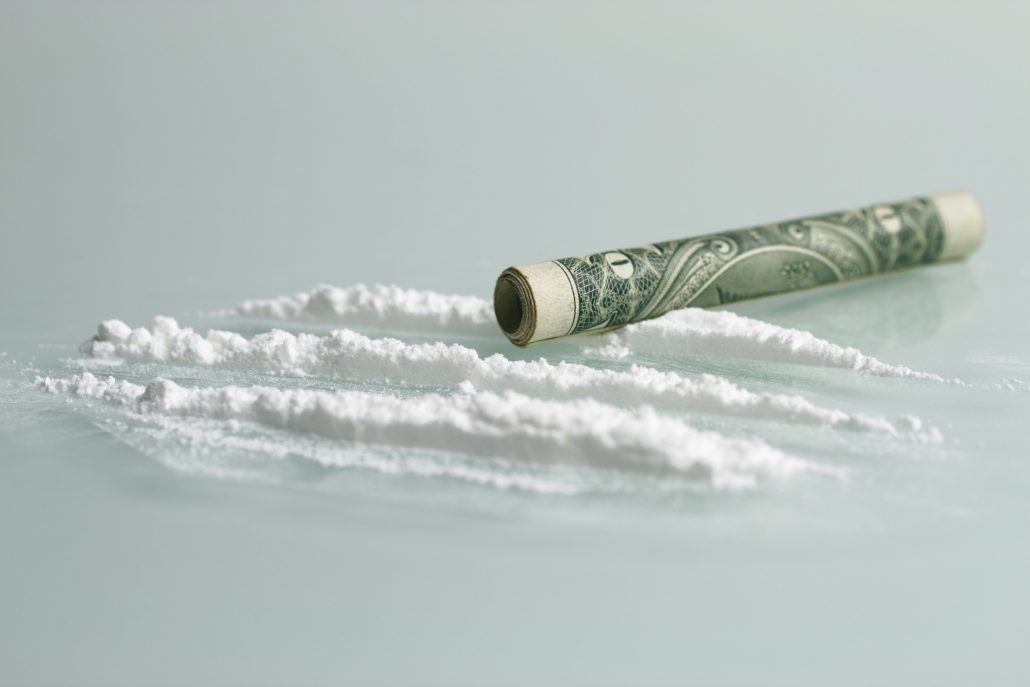
According to one study, trace amounts of cocaine can be found on 4 out of every 5 dollar bills. However, cocaine is a fine powder and is easily spread around, meaning the bill wasn’t necessarily used as a snorting straw.
-
Nazi Addicts
Historians say that Hitler was addicted to cocaine, among many other drugs including methamphetamines. Nazis often used drugs as a means of stimulation. Many believe all those stimulants helped ignite his ranting paranoia.
Prevalence
-
Second Most Popular
Cocaine is the second most commonly used illicit drug in the United States. The first is marijuana.
-
Emergency Visits
In 2004-2007 cocaine overdose caused 31% of visits to the emergency room.
-
First Timers
Every day, 2,500 Americans try cocaine for the first time.
-
Worldwide
Over 200 million people use illegal drugs worldwide. 21 million of those people use cocaine.
-
American Addiction
Even though the United States only makes up less than 5% of the world’s population, the country consumes approximately 37% of the world’s cocaine.
-
Illicit Industry
The illicit cocaine industry earns between $100 and $500 billion each year.
-
Scotland Snorts
Scotland has the highest cocaine use out of any other country in the world. One out of every 40 Scots uses cocaine, which is approximately 2.4% of the population.
-
Babies Born Addicts
Every year in the United States more than 400,000 babies are born already addicted to cocaine.
Health Risks
-
Fast-Acting Addiction
An estimated 10% of all people who begin using cocaine will immediately progress to serious, heavy.
-
Sharing is Hurting
Sharing straws to sniff cocaine can actually spread several blood-borne diseases, including hepatitis C.
-
Mental Health
Cocaine users tend to have higher rates of certain mental health conditions, including:
When compared to the general population.
-
Perfect for Heart Attacks
Come describe cocaine as the “perfect heart attack drug” because it causes so many harmful effects, including:
- Increased blood pressure
- Stiff arteries
- Thickening of heart muscle walls
Even worse is that these irregularities persist long after the effects of cocaine have worn off, even for those who aren’t chronic users.
-
Bruxism
Chronic cocaine use can cause a condition called bruxism, which is grinding of the teeth involuntarily.
-
Drug-Induced Decay
Cocaine frequently causes dehydration and dry mouth. This leads to many users having less saliva in their mouth, which can then lead to tooth decay.
-
The Nose No’s
Cocaine can also destroy the cartilage separating a person’s nostrils after continued use.
-
Deadly Influence
The direct pharmacological effects of the cocaine are often only credited with 1/3 of the deaths associated with cocaine use. The majority of deaths in connection with cocaine are by:
- Homicide
- Suicide
- Motor vehicle collisions
Meaning a lot of people die as a result of the mind-altering properties of cocaine and risk behaviors associated with the drug.
-
Lethal Mix
Consuming cocaine with alcohol is one of the deadliest drug combinations there is.
Now you may be wondering… what is the last fact going to be? You might get through this list knowing less than you expect about the powerful illegal stimulant…
NUMBER 25…
You can quit because there is help for you. Cocaine addiction can be crippling and feel impossible to overcome. But with safe medical detox, followed by effective and holistic treatment options, you can build a lasting foundation for recovery from cocaine addiction.
Palm Healthcare Company takes pride in offering comprehensive and innovative treatment options to help individuals create a personalized recovery plan. If you or someone you love is struggling, please call toll-free now. We want to help.
CALL NOW 1-888-922-5398
by Justin Mckibben | Nov 2, 2017 | Maintenance Drugs, Methadone, Naloxone, News, Prescription Drugs, Suboxone, Vivitrol
While the nation is still struggling to find the right strategy to climb out of the opioid crisis in U.S. it seems many are holding onto the idea that Big Pharma is going to save us from the destruction they helped create. While we can agree that evidence-based medical assistance in recovery is a useful tool, some seem to think that the only fix for a pill problem is more pills, or in this case, more needles.
Just recently, after President Trump declared the opioid crisis a “National Health Emergency”, the advisory committee to the U.S. Food and Drug Administration (FDA) voted 18-1 that a new injectable drug called RBP-6000 could benefit addicts and the lower of two doses studied had an “acceptable” safety profile.
So what does this mean for the opioid epidemic efforts? Is Indivior a miracle injection that is going to make the epidemic more manageable, or is it another kind of Methadone or Suboxone that is just keeping people hooked?
What is RBP-6000?
For a little background, RBP-6000 is an experimental drug designed to help fight America’s growing opioid addiction crisis. It is described as a sustained-release buprenorphine. It is designed to be delivered once a month as a subcutaneous injection. The compound solidified once in contact with bodily fluids and releases buprenorphine over time.
If approved, it will be the first monthly injectable buprenorphine treatment. When creating the drug the manufacturers studied two dosing regimens.
In one, 300 milligrams were given once a month for six months.
In the other, two doses of 300 milligrams were followed by four doses of 100 milligrams.
According to reports, there was only a minute difference in effectiveness between the two doses, and they drug company acknowledge that the higher dose of RBP-6000 caused more side effects. Looking closely into some of the reports from the research, some side-effects include:
-
Headache
-
Constipation
-
Nausea
-
Injection site pruritus
-
Vomiting
-
Insomnia
-
Upper respiratory tract infection
While these side effects were not noted in an extremely high percentage of those tested, they are still relevant to consider until there is more extensive data available. So far, the report says the safety profile is consistent with that of Suboxone.
So RBP-6000 is like Suboxone using the delivery of Vivitrol; another injectable drug used to try and block the effects of opioids.
Big Pharma Making Big Moves
This is one sign of how Big Pharma is stepping in to make a buck off of the opioid epidemic yet again.
Indivior is the company behind RBP-6000. It was originally part of Reckitt Benckiser as the Buprenorphine division but has since split off to be a specialty pharmaceutical company. Indivior already sells Suboxone Film, a product which combines buprenorphine and naloxone. Suboxone is a maintenance drug widely used in America to try and curb the effects of opioid addiction and withdrawal, but Suboxone is known to have its own side-effects and withdrawals. Some even attest that Suboxone is itself addictive and very difficult to get off of.
Two months ago the share prices for Indivior took a deep hit after a U.S. court ruling clearing the way for a generic rival to Suboxone Film. So, with new competition on the way in the Suboxone market, Indivior put a renewed focus on another maintenance drug to bring to market.
Some analysts already expect that RBP-6000 could capture around 30% of the broader buprenorphine market. Some believe this new form of injectable buprenorphine could generate annual sales of around $700 million by 2021.
Jefferies sees potential sales of $1.3 billion by 2025.
So now the push for this new drug is boosting its sales prospects as competitors threaten revenues from Suboxone sales.
To learn more about why Suboxone isn’t the easier answer some people think it is, download our FREE E-BOOK
“5 Things No One Tells You About Suboxone”
DOWNLOAD FREE E-BOOK
Waiting for FDA Final Ruling
This endorsement on behalf of RBP-6000 comes less than a week after FDA Commissioner Scott Gottlieb announced the agency’s plans to promote extensive use among opioid addicts of less harmful opioids such as methadone and buprenorphine, the active ingredient in RBP-6000.
However, some of the FDA panelists still would like to see more data about which patients should be given the higher dose. Other panelists say they would like to have it available, even though they lack of data supporting any additional benefit of higher doses. So even though the drug is shown to have side-effects in higher doses, and there is limited information on how these side-effects impact the individual, the FDA is considering to let this drug pass the grade.
The FDA’s decision is set to be made by November 30th, although typically the agency follows the recommendations of its advisory panels. So it may very well already be a done deal.
Why It Matters
Again, with respect to the importance of offering alternatives to particularly dangerous opioids like heroin or fentanyl. It is important to have resources for the purpose of preserving of life. Keeping people alive long enough to get help is crucial. But we also have to see that this is not a miracle cure.
Methadone, Suboxone, and Vivitrol may serve a purpose for some in a certain capacity. However, these drugs are not an adequate substitute for comprehensive addiction treatment. Each one of these methods should be accompanied by a holistic treatment plan that addresses all aspect of addiction, including emotional and mental health.
Drugs like RBP-6000 may help subdue the more serious symptoms from the physical side of addiction, but they can also present their own risks.
It is important to offer safe medical assistance, but we have to remember that these Big Pharma companies are not selling us instant cures to opioid addiction. This isn’t even the first time we have seen a new drug come out to try and treat the opioid problem from companies that are closely related or directly responsible for narcotic medications that helped fuel the issue.
Remember, there is not a quick fix for this problem. We cannot prescribe our way out of the problem. It is going to take better treatment resources beyond more medications.
Drugs like RBP-6000 from Indivior are not necessarily a bad thing, but they also may not be the kind of treatment people should focus on. Instead, there are safe medical treatment options that offer holistic resources and mental health services. A lasting recovery begins with effective treatment. If you or someone you love is struggling, please call toll-free now.
CALL NOW 1-888-922-5398
by Justin Mckibben | Oct 30, 2017 | Drug Abuse, Fentanyl, Fentanyl, News, Prescription Drugs, Synthetic Drugs

In December of 2016, the Palm Partners Recovery Center blog covered a story about how federal prosecutors were bringing racketeering charges against several employees of Insys Therapeutics Inc. The initial report and the controversy that followed was a profound moment considering criminal charges are rarely ever brought against pharmaceutical companies. Now it seems that even more the corporate drug dealers who helped create the opioid crisis in America are going to be finding themselves under serious scrutiny for their unethical practices.
Last week President Trump declared the opioid epidemic a public health emergency. That very same day, as if to accent the severity of the crisis and the unignorable need for change, the co-founder of Insys Therapeutics Inc. himself was arrested on fraud and racketeering charges.
Insys Therapeutics CEO Taking a Fall
John Kapoor is the former CEO of Insys Therapeutics; a founding father of one of the most prominent opioid manufacturing companies in America. As of last week, Kapoor is reported to be charged with conspiring to push the company’s signature drug for unacceptable uses through a series of bribes and kickbacks.
The drug Kapoor and his company are accused of pushing just happens to be one of the most dangerous opioids on the market, which has contributed to countless deaths across the country over the years- fentanyl.
The brand name for the product made by Insys Therapeutics Inc is Subsys. This extremely potent compound transmits the synthetic opioid fentanyl in spray form. As an opioid analgesic, people use Subsys by spraying it under the tongue for quick absorption of potent fentanyl. Technically, this drug is supposed to only be used for treating cancer patients suffering from severe pain. But according to prosecutors that is very far from the sales strategy Kapoor and his executives were using.
With recent reports showing that approximately 64,000 Americans died last year from drug overdose, and an estimated 20,100 overdose deaths linked to synthetic opioids like fentanyl, how many of those lives were impacted by the drug Insys forced onto the market with bribes?
According to the prosecution, Kapoor and several other former high-ranking executives at the company colluded to bribe doctors to write-
“- large numbers of prescriptions for the patients, most of whom were not diagnosed with cancer.”
They also allegedly-
“- conspired to mislead and defraud health insurance providers who were reluctant to approve payment for the drug when it was prescribed for non-cancer patients.”
How did they do all this?
The Insidious Work of Insys Therapeutics Inc
Back in 2016, there was the discussion of six former executives and sales-managers from Insys Therapeutics Inc. being arrested. The charges, according to the Justice Department, included:
- Conspiring to defraud health insurers
- Conspiring to bribe doctors into needlessly prescribing Subsys, the company’s fentanyl painkiller
The scam is allegedly a long list of kickback schemes, sham speaking programs, and illegitimate gifts or services.
Sham Speaking
Allegedly, doctors and nurses were paid to attend dinners at high-end restaurants. These dinners were disguised as ‘speaker programs’ that were actually described as gatherings of friends and co-workers who had no power to prescribe medications. Supposed ‘speakers’ were paid fees of up to several thousand dollars for attending these exclusive outings.
One healthcare provider reportedly received an illegal kickback to the tune of $83,000!
All of this money to bribe doctors and other healthcare professionals to prescribe Subsys, even when inappropriate. So not only were they pressuring doctors to use their product over alternatives, but also to prescribe a dangerous and potentially fatal opioid to people who didn’t even need it.
Country-Wide Con-Artists
Other stories written about in Forbes include cases in:
In 2015 a nurse practitioner pleaded guilty to violating a federal anti-kickback statute by taking money from Insys to prescribe the drug to Medicare patients who did not have cancer.
A former Insys sales representative also pleaded guilty to a conspiracy to violate the anti-kickback statute by paying two doctors to prescribe the drug.
The state has filed multiple claims against Insys Therapeutics involving the pressuring prescriptions of Subsys for unapproved uses.
Doctors who have worked with the company are being investigated by states including:
-
New York
-
Michigan
-
Florida
-
Kansas
-
New Hampshire
-
Rhode Island
U.S. attorneys in the Central District of California and the District of Massachusetts are also investigating Insys Therapeutics Inc.
Shady Gifts and Services
The buck doesn’t stop there either. It wasn’t just cash gifts for unethical practices. Insys Therapeutics wanted their partners in crime to get the full effect of their illicit activities.
The company would send its own employees to work in doctor’s offices when the physician prescribed their fentanyl fuming drug to patients. They even hired the relatives of health care providers as a favor to the family for their loyalty to Subsys.
Insurance Fraud
They allegedly even set up a portion of their staff to defraud insurance companies by calling to speak with insurance representatives while posing as doctors. Some allegations state they were even misrepresenting a patients diagnosis to inflate drug sales.
A December of 2016 indictment states that Insys actively worked to defraud insurance companies by setting up the “reimbursement unit” dedicated to obtaining prior authorization from insurers and pharmacy benefit managers.
Other Insys Therapeutics Exes
Kapoor stepped down as chief executive in January. However, he is definitely not the only former Insys Therapeutics executive currently under fire. This is just the tip of a very rocky ice-berg. The indictment from 2016 included:
-
Michael L. Babich
Former CEO and President of the company from Scottsdale, Arizona
-
Alec Burlakoff
Former Vice President of Sales from Charlotte, North Carolina
-
Richard M. Simon
Former National Director of Sales from Seal Beach, California
-
Sunrise Lee
Former Regional Sales Director from Bryant City, Michigan
-
Joseph A. Rowan
Former Regional Sales Director from Panama City, Florida
-
Michael J. Gurry
Former Vice President of Managed Markets from Scottsdale, Arizona
On January 5, 2017, all of these defendants appeared in federal court for their initial appearance and arraignment. Each has pled not guilty and been released on conditions approved by the court. A Status Conference hearing followed on September 12, 2017 that is the first of many to be held over several months. That day Massachusetts federal judge set a trial date for October 15, 2018, for the 6 executives.
For now, we have to wait and see if any of the dirty laundries from these alleged white-collar criminals come out in the wash.
Holding Big Pharma Accountable
For a long time, Big Pharma companies have been using unlawful and corrupt tactics for marketing and distribution, which many now see has brought with it some great devastation to communities across the nation. Now, during an opioid crisis that has claimed tens of thousands of lives a year, for several years, these discretions are finally catching up to those accused of corporate greed. The DEA, FBI and Justice Department, along with several state officials and district attorneys, are now aggressively pursuing charges against Big Pharma operators who have a connection to some of the most dangerous and widely abused narcotics on the market.
The acting U.S. Attorney William D. Weinreb said in a statement,
“In the midst of a nationwide opioid epidemic that has reached crisis proportions, Mr. Kapoor and his company stand accused of bribing doctors to overprescribe a potent opioid and committing fraud on insurance companies solely for profit.
“Today’s arrest and charges reflect our ongoing efforts to attack the opioid crisis from all angles,”
Kapoor was arrested in Arizona and his indictment was filed in federal court in Boston. Prosecutors say the charge of conspiracy to violate the anti-kickback law carries the possibility of up to five years in prison. However, the charges of conspiracy to commit racketeering and conspiracy to commit mail and wire fraud each carry a maximum sentence of up to 20 years in prison. Needless to say, Mr. Kapoor is in for a fight.
But many are still wondering if these executives will truly be held accountable? And truthfully, is it even enough at this point? Even if proven to be indirectly contributing to the opioid epidemic, how could anyone ever know how many lives were damaged or lost because the powerful played around with lethal prescription drugs to line their pockets?
For more important information on the dangers of prescription drugs, download our FREE E-BOOK “Big Secrets of Big Pharma: Why They Secretly Hope You Get Hooked”
DOWNLOAD FREE E-BOOK
With recent reports showing that approximately 64,000 Americans died last year from drug overdose, and an estimated 20,100 overdose deaths linked to synthetic opioids like fentanyl, how many of those lives were impacted by drugs like Subsys being forced onto the market with bribes?
More needs to be done to stop Big Pharma companies like Insys Therapeutics Inc from exploiting the system and putting the lives of millions of Americans at risk. And not just the middle-men should be accountable, but also those sitting comfortably at the top these industries. At least this is a start. But for the individual, it all starts with taking action. Getting safe and effective treatment can not just save a life, but help someone build a foundation for a better one. If you or someone you love is struggling, please call toll-free now. We want to help.
CALL NOW 1-888-922-5398
by Justin Mckibben | Oct 26, 2017 | Addiction Treatment, Celebrity, Donald Trump, Drug Policy, News, Opioids

All day people all over the country have been waiting for President Trump to make his formal announcement of the opioid epidemic as a national emergency. Finally, the time for the event at the White House has come, but the announcement has some wondering if enough is being said. So we want to take a little bit of time to talk about some of the highlights from the president’s announcement.
President Donald Trump did give a detailed speech regarding many efforts that are being pursued to combat the opioid epidemic in America. Yet, some are saying that he didn’t say enough about how these resources would be funded, pointing out his declaration was for a Public Health Emergency.
So what does it all mean? Why does the difference matter?
Public Health VS National Disaster
To be clear, both are forms of national emergency declarations. What is the big deal? Well, the difference is the scope and funding that comes with address each order. So today, President Trump, through the Public Health Services Act, directed his acting secretary of health and human services to declare a national health emergency. According to a senior White House official, this designation that will not automatically allocate additional federal funding for the crisis.
If the president has utilized the Stafford Disaster Relief and Emergency Assistance Act, otherwise calling the opioid epidemic a national disaster, the federal government would have been able to immediately tap into funds from the Federal Emergency Management Agency’s Disaster Relief Fund to combat opioids.
Some may say this move was made since the Stafford Act is traditionally used for natural disaster relief, such as with recent Hurricanes Harvey, Irma and Maria. President Trump and President Obama’s administration officials both say that using the Stafford Act would have been too broad and put an unwarranted burden on the Federal Emergency Management Agency’s Disaster Relief Fund. Which seems somewhat likely, since this fund is already being depleted by recovery efforts from the three major hurricanes that hit the United States this year.
Overall, it seems many officials from this and the previous administration feel that a Public Health Emergency was a more appropriate choice out of the two.
What Will Public Health Emergency Do?
The order from President Trump will do some good, including:
- Expanding access to telemedicine to get treatment for those in rural areas
- Instructing agencies to limit bureaucratic delays for dispensing grant money
- Secure Department of Labor grants for the unemployed
- Shift funding for HIV and AIDs programs to provide more substance abuse treatment for people already eligible
- Expands Narcan access
The nationwide health emergency that Trump ordered is more direct but comes with less immediate action.
According to Senior White House officials, they will be following up by working with Congress to get more money for the Public Health Emergency Fund. Which is a good start, since critics are quick to point out there is only $57,000 in this fund.
It is also said to increase federal funding in year-end budget deals currently being negotiated in Congress. In fact, Democratic Pennsylvania Senator Bob Casey introduced a bill this week that would provide $45 billion for opioid abuse prevention, surveillance, and treatment over 10 years. But will it ever see the light of day?
The President Trump Plan: Pros
There were various parts of the speech from President Trump that did hint at some interesting ideas. Some pros and some cons include:
-
Expanding Treatment Options
Possibly one of the bigger moves here is that President Trump said his administration would also be working to reduce regulatory barriers that prevent people from getting treatment, such as one that bars Medicaid from paying for addiction treatment in residential rehab facilities larger than 16 beds.
If the president can remove some of these hurdles, more people may have access to better options for treatment.
National Institute of Health has taken the first steps of instituting a public-private partnership that will be working toward research and resources including:
- New treatment for addiction
- New treatment for overdose
The president also said,
“We are already distributing nearly $1 billion in grants for addiction prevention and treatment. And over $50 million to support law enforcement programs that assist those facing prison and facing addiction.”
-
Indictments
For one, Trump said that the Department of Justice is bringing indictments against Chinese drug traffickers responsible for bringing deadly synthetic opioids like fentanyl into the country.
Another interesting announcement made by President Trump is that the federal government will soon be bringing major lawsuits against people and companies that are involved in the overprescribing and other shady practices concerning prescription drugs.
-
Pulling Dangerous Prescription Drugs
Trump also says the FDA is now requiring drug companies that manufacture one high-risk opioid, Opana ER, be withdrawn from the market immediately. He states,
“We are requiring that specific opioid, which is truly evil, to be taken off the market immediately.”
President Trump also states his administration will also be pushing for the development of non-addict pain medications.
The President Trump Plan: Cons
President Trump did in many cases acknowledge some useful aspects of combatting the epidemic. But, there were also some ideas that continue to fall short of innovative.
-
Advertising
President Trump is also emphasizing the use of a “Massive advertising campaign” to keep young people from doing drugs in the first place. President Trump said-
“- they will see the devastation and ruination it causes to people and people’s lives.”
“The fact is if we can teach young people, and people generally, not to start, it’s really, really easy not to take them. And I think that’s going to end up being our most important thing. Really tough, really big, really great advertising.”
While prevention and education are extremely important, many criticize this strategy saying that these old tactics of “Just Say No” and the D.A.R.E. program just don’t work. This advertising might have been useful if focused on treatment options, but if it is more of the scare tactics of “Refer Madness” then we probably won’t see much improvement.
-
The Wall
The Commander in Chief also took this opportunity to promote the building of the wall between the United States and Mexico, stating:
“90% of the heroin in America comes from south of the border, where we will be building the wall, which will be greatly helping this problem!”
He took time in his speech to highlight the need to “breaking up gangs and distribution efforts” as a primary way to curb the epidemic.
Of course, the wall is often an issue of contention. Many experts have argued since President Trump proposed this as the key element of his war on opioids that attacking the supply has never worked with preventing the spread of addiction. And even if it did, many believe the wall will do little to prevent drugs from being brought into America from south of the border.
-
Funding
Some experts are still saying this is not a proper plan because while it does allow federal agencies to move grant money, it establishes no immediate funding for a crisis that killed over 64,000 Americans last year.
Meanwhile, the GOP-controlled House of Representatives today narrowly passed a Senate-approved budget resolution 216 to 212, that some experts claim will cause all $1 trillion cut to Medicaid and $500 million cut to Medicare. Many recovery advocates fear that with the ambiguity concerning health care coverage there will not be enough resources in time to provide treatment to those in need.
Some representatives still believe more funding needs to be committed to the issue, while others say that many people struggling with addiction don’t have health insurance and that more must be done to expand coverage.
Moving Forward
The chairman of President Trump’s opioid commission Chris Christie commended the president, calling his announcement a “bold action” to address the opioid crisis. The opioid commission will present a comprehensive plan next week with the final report on November 1st.
No matter what your opinion at this point, we can all agree we need to be moving forward. This means taking an honest look at what is working and what isn’t. Still, the fact that the highest office in the nation has taken the time to address the issue in such terms is hopefully a sign of dramatic change on the way. Only time will tell how this latest move from President Trump will truly impact the opioid epidemic. For now, there is sure to be plenty of debate over the weight of today’s statements and how they will influence policy. There are some promises to be kept, for sure.
There is a lot more to this conversation, but for now, we have to hope that some of these new opportunities will give options and hope to those in America suffering tragically. The opioid crisis is nothing we can expect to be fixed by one person overnight. We have to continue to provide resources to those in need. Palm Healthcare Company facilities have proudly provided addiction treatment resources for decades to those in need. If you or someone you love is struggling, please call toll-free now.
CALL NOW 1-888-922-5398
by Justin Mckibben | Oct 24, 2017 | Addiction Stigma, Addiction Treatment, Drug Policy, Inpatient Treatment, Mental Health, News, Prescription Drugs

If that headline seems kind of confusing, don’t worry, it should. Technically insurance companies are already required by law to provide the same coverage for substance abuse and mental health that they do for other health conditions… and therein lies the issue.
Back in August the White House Opioid Commission, established by President Trump and led by New Jersey Governor Chris Christie, made several recommendations to the current administration about how to address the current drug crisis as it damages communities across the country. One of those recommendations was to declare a national emergency, while others had to do with options for prevention and education.
In the aftermath of ex-DEA agent Joe Rannazzisi’s eye-opening interview exposing the shady connections between Congress and Big Pharma companies, many have been looking closely at how government officials and multi-billion dollar empires helped create the opioid epidemic. Now the White House’s Opioid Commission is putting a focus on how health insurance companies and the flaws in their policies have contributed to the intensifying addiction crisis.
So with the opioid commission saying they will call-out insurers and make demands on coverage for addiction treatment, will more people have access to help?
Restricted Addiction Treatment
One of the biggest issues the opioid commission seems to have with insurance companies is that frequently their policies only cover one type of addiction treatment and not others. It seems insurance companies are convinced that with a complex and extremely personal issue like substance use disorder or mental health conditions, there is a one-size-fits-all answer. Sadly, most advocates can tell you this isn’t the case.
Something else especially frustrating is that laws already exist to prevent insurers from treating addiction treatment different than any other health issue. Chris Christie himself said,
“Why are we still not seeing addiction services covered, and mental health services covered as broadly as every other type of disease?”
“And what do we need to do to make sure that the law is enforced and followed?”
The Mental Health Parity and Addiction Equity Act of 2008 requires health insurers to treat mental health and substance abuse disorders the same as any other disease. It means they should provide health care coverage for these conditions without additional limits, co-pays or deductibles. If companies add on additional requirements, it creates even more barriers between the suffering individual and treatment. Sadly, not every insurance company thinks it has to play by the rules.
A task force convened by President Barack Obama last year reported that numerous insurance companies still place a number of limits on addiction coverage, like more strict pre-authorization requirements. The insurance companies claim that their policies are only part of a complex problem, insisting that the issue also has to do with shortages of doctors and poor medical training from healthcare providers in the field of addiction treatment.
However, the simple fact that insurance companies are still trying to push back against supporting addiction treatment has the opioid commission ready to address the inconsistencies that are making it even harder for people who need help to get the help they deserve.
Holding Insurance Companies Accountable
The opioid commission is not holding back when it comes to trying to make insurance companies contribute to solutions since they helped contribute to the problem. The New Jersey Governor warned health insurance companies to be prepared for a final report that will “place new demands” on health insurance policies.
Christie and the opioid commission seem to be playing offense, saying Big Pharma drug companies and health insurers profit while allowing an epidemic of addiction to continue, but these new demands will hopefully change all that. Christie added,
“I’m a capitalist. I want everybody to make profits. I think it’s great. But we can’t any longer go about addressing this problem this way,”
“I hope you’re prepared to accept the challenge, because we know if it hasn’t gotten into your own house yet, it could, and then all the sudden your perspective on this problem could become markedly different.”
Not only is there more pressure on insurance companies when it comes to treatment options in their policies, but with how they handle medications in the first place.
Health insurance providers are also under a greater deal of scrutiny for policies that sometimes favor powerful and addictive painkillers over less addictive, and more expensive, variations. So not only are they limiting the options when it comes to getting treatment for substance abuse, but they are limiting coverage of medications to more addictive drugs to save money.
Insurance providers did show up to testify at the commission to help create a more comprehensive view of the issue. Involved were executives from some of the nation’s largest insurance companies:
- Aetna
- Anthem
- Blue Cross Blue Shield
- Cigna
- Harvard Pilgrim Health Care
- Kaiser Permanente
- UnitedHealth Group
- UPMC Health Plan
Representative Elijah Cummings, the ranking member of the House Oversight Committee, also has questions for many of those same companies. Some of these inquiries stem from a report by The New York Times last month stating insurance companies “erected more hurdles to approving addiction treatments than for the addictive substances themselves.”
Cummings wrote letters to seven of the companies which state,
“This is not a hypothetical problem. The over-prescription of opioids leads to addiction and death.”
The White House’s opioid commission has also spoken with leaders in the pharmaceutical industry. All this shows that the opioid commission is not only worried about exploring our options for fixing the issue but also in examining all the elements that helped cause the opioid epidemic in America. Christie says the final report to President Trump will include sweeping recommendations but will also be “extraordinarily instructive in terms of how we got here, which is an important thing for this commission to acknowledge.”
The commission will hold its last meeting November 1st before delivering its final report to the President. Only time will tell what demands this report plans to place on insurance companies to provide more coverage for addiction treatment services.
Will Insurance Companies Change?
The big question becomes how will this impact the services offered by insurance companies. Will the opioid commission’s suggestions help shape new policies, or will some insurance companies continue to ignore the parity laws put in place to make sure they do not discriminate against the treatment of substance abuse?
Will these changes allow for the coverage of different innovative and holistic treatment options, or will the change only support programs that depend on maintenance drugs like methadone or Suboxone?
Hopefully, the new demands being put on insurance companies will help to support mental health and substance abuse parity. When it comes to addressing addiction in America, we need every resource we can get in order to move forward with overcoming the opioid epidemic. With more officials taking a closer look at every aspect of the issue, perhaps we can get a more effective strategy for addressing the problem.
With so many people struggling with opioids and other drugs across the country, comprehensive and effective treatment is essential to making any real progress. For decades Palm Healthcare Company facilities have been providing holistic addiction treatment options that help create lasting change. If you or someone you love is struggling with substance abuse or addiction, please call toll free now.
CALL NOW 1-888-922-5398
by staff | Oct 19, 2017 | Addiction, Celebrity, Internet, Mental Health, News, Social Media
Anyone can see that these are divisive times.
Every day we see another story about protestors, protests against protestors, and counter-protests against those protesting the free-speech of protestors. Various movements drive outrage, and some of the loudest voices today are the most controversial. But are we addicted to it?
Today, the University of Florida in Gainesville is bracing for the impact of another contentious event. Known white supremacist Richard Spencer has been scheduled to arrive today on campus to deliver a speech, promoting his openly racist and radically white nationalist ideals. A guy who seems to have a knack for intentionally stirring up racial tension in public, preaching about ‘peaceful ethnic cleansing’, and waving around tiki torches like nobodies business.
With so many other troubling things happening in America; the ongoing opioid crisis that is killing tens of thousands every year; the debate on gun control following the tragic mass shooting in Las Vegas; the concern over environmental deterioration or the devastation caused by recent Hurricanes to states like Texas and the island of Puerto Rico, doesn’t it seem we already have plenty to argue about?
How do voices like Richard Spencer spark our addiction to the controversy?
White Supremacist Invade Florida
The event is scheduled for this afternoon and will be the first college visit Richard Spencer has made since he and others participated in the “Unite the Right” rally in Charlottesville, Virginia.
The same day where the horrific display of people marching down the streets of an American city with Nazi flags and Ku Klux Klan symbols, many of them armed, clashed with counter-protestors. The same day a young woman was killed when a white supremacist rammed his car into a crowd of anti-racist protestors.
Richard Spencer stood on the side with neo-nazis and klansmen.
Today officials at the University of Florida are worried that this event will also become violent. In fact, the president of the University of Florida, Kent Fuchs, believes Richard Spencer wants there to be violence, hoping it will garner sympathy for the ‘alt-right’ movement he represents. In an interview Fuchs states,
“They’re coming to campus with the intentions of confrontation and with the intention of having all of us repeat their view on the world.”
On Monday Rick Scott, Florida Governor, declared a state of emergency for Alachua County to enable law enforcement to work together more effectively at preventing violence. There has also been the talk of activating the National Guard if necessary.
Of course, Richard Spencer took all this extra precaution as an opportunity to pat himself on the back. He’s alleged to be absolutely flattered by the state of emergency on his behalf.
Hint of Hypocrisy
One thing that always comes to these kinds of conversations is the discussion of people’s first amendment rights. When we get to the topic of whether universities should permit speakers to come to their campus, people always argue that the individual’s freedom of speech should be a priority and that these institutions should allow people who are controversial and divisive to speak, regardless of the harm or outrage caused by their poisonous rhetoric.
In this writer’s personal opinion– (and I know this may sound weird)- I agree with letting people I disagree with have a chance to talk. If we give those we think are wrong a chance to speak, we can engage the conversation and challenge them. If we completely silence all ignorance I think we can’t comprehensively address it.
THAT BEING SAID…
The problem I take with situations like this is hearing that the University of Florida is spending over $600,000 on additional security for this event in order to protect white supremacists. Money coming from taxpayers that could be spent on providing tuitions for who knows how many students.
Of course, this is because UF is a public university, and is therefore prohibited from stopping the event based on the contents or views of the speech. The university provided a permit for Spencer to speak, but the event is unaffiliated with the school, and no student groups sponsored the speech or invited Spencer. Plain and simple, it is an absolute set-up for a huge fall-out. And the university is not permitted to defer the costs of protecting Spencer to him or his alt-right movement.
But I digress…
Perhaps the greatest hypocrisy I see here is that the organizers for Spencer’s speech supposedly will only allow people who look like alt-right supporters to be among the 700 people inside the Phillips Center for the Performing Arts. I can only guess what they look like.
So in essence, Spencer’s right to preach hate on a college campus should be a priority (sarcasm implied), even if the vast majority of students disagree with his oratory… But no one who disagrees with him should be allowed to participate in the dialog?
Our Addiction to Controversy and Outrage
Of course, just participating in this conversation is part of feeding the controversy. Therefore, this article in and of itself is putting the focus on the divisive subjects that push people into radical ideologies and pull communities apart. But the conversation still needs to be had; why are we so addicted to this kind of conflict?
Did you know our neurobiology rewards our outrage? A simple reason we are addicted to the controversy is that our outrage does feel good.
Our anger overrides all other moral and rational constraints in the brain because it originates from our primordial, original limbic system. This is the part of the brain where our most automatic emotions like fear and desire come from.
The limbic system has the most direct links to our fight-or-flight response system. It controls our adrenaline rushes, alertness, and other instincts. Controversy and outrage tap into those instincts and we can become addicted to the rush we experience through the limbic system.
The ego is a primary fuel source for our outrage and our attraction to controversy. Not only do we get a thrill from the debate and a rush from feeling right in a debate, but it is a way we overcome our own feelings.
Anger can be triggered by feelings of insecurity or weakness. Our outrage is a surge of emotion that flows in to overcome those feelings of fragility. So our outrage and immersion into controversy make us feel stronger or superior.
Feeding Our Addiction
Addiction compels you to chase a high that only makes you feel worse; it reduces you to a lesser version of yourself. It seems, however, that Americans are largely addicted to controversy and discord. When you look on social media or watch television it appears evident we are adopting a society that is hooked on hostility and that undervalues empathy.
How did this happen? Simple; More than most drug addicts, our dealers are literally everywhere! The business of controversy is an ugly but lucrative one. Any drug trafficker knows how that is. Many people who dig up every piece of offensive, frightening or infuriating news to publish don’t typically let it bother them in the same way. Especially online in forums, most posters are thrilled to pedal it because they know their addicted customers all too well.
The drama-dealers know they’re making us feel a thrill of uncertainty or weakness, while simultaneously making us feel stronger and better-than.
True Strength is in Unity
The truth is, being ‘right’ or debating better than others doesn’t make any of us stronger. Our true strength comes not from our addiction to being smarter or superior in any way. ‘Alt-right’ is not the future, it is a reprehensible and sectarian atrocity that should not be given even a finite measure of merit. But people will thrive off of the discourse it will create.
Contrary to the garbage Richard Spencer will spew about diversity being an evil and an unnatural threat to the supremacy of the white race, diversity, and unity despite our differences is what gives us true strength. It almost seems ridiculous that as adults we still have to keep arguing this point. Our nation has a very sordid past, but we are better for admitting it and trying to do better.
People like Richard Spencer, feed on the fear, weakness, insecurity and false strength created by their archaic and disgraceful controversy. This is not strength, it is pure exploitation of their own people in a callous attempt at prestige. Spencer is another dealer, committed to trafficking in racism, fascism, and discontent. Like any other heroin or crack dealer.
Student leaders from the University of Florida have been planning events using #TogetherUF to promote education and dialog while encouraging unity and embracing diversity. Hopefully, these collective efforts to pull people together can counter-balance the separation Spencer and his followers hope to create.
It is with great hope that the campus and its students remain safe, as thousands have already committed to marching in protest of Spencer and his movement.
“Our true nationality is mankind.”
-H.G. Wells
Palm Healthcare Company believes everyone from every culture or community deserves a chance to be happy and healthy. We embrace the unity of our staff, our clients and our community towards building better futures for all of us. We know addiction does not discriminate, and we are here to help. If you or someone you love is struggling, please call toll-free now. We want to help.
CALL NOW 1-888-922-5398
by Justin Mckibben | Oct 17, 2017 | Drug Policy, News, Opioids, Prescription Drugs, Recovery, Stigma
Back in August, the Commission on Combating Drug Addiction and the Opioid Crisis began urging President Trump to declare a national public health emergency to combat the opioid crisis that has crippled countless communities around America. While the President did soon enough say that he believed the opioid epidemic was indeed a national emergency, the actual official process has yet to begin. However, just this week news broke that President Trump will soon formally declare the “national emergency” status of the opioid crisis.
Reports indicate President Trump plans to make the official declaration next week. It seems appropriate following the explosive exposé following the story on ’60 Minutes’ of former DEA agent Joe Rannazzisi pointing a finger at Big Pharma companies, Congress, and lobbyists for fueling the opioid epidemic.
In fact, Republican Representative Tom Marino, who was the top pick for the Trump administrations Drug Czar, was name-dropped in a less than flattering light in the ’60 Minutes’ piece. Reports today now show Marino has withdrawn from consideration following the story.
So what does this newest revelation mean for combatting the opioid crisis?
Raising Awareness
One of the initial reasons for declaring a national emergency is pretty straight-forward; raising awareness. Not that we don’t see enough shocking news stories or warnings from local officials being issued in various states, but more attention on the issue will help channel more resources into actually helping address it.
As the commission states in their report:
“It would also awaken every American to this simple fact: if this scourge has not found you or your family yet, without bold action by everyone, it soon will,”
“You, Mr. President, are the only person who can bring this type of intensity to the emergency, and we believe you have the will to do so and to do so immediately.”
When the President of the United States says something is a priority, people take notice. Regardless of whether people always agree on politics, when we can all get behind a major issue and put effort into a more inclusive conversation, there is a better chance more can be done.
Overcoming Addiction Stigma
One of the most important aspects of fighting addiction is overcoming the addiction stigma itself. Many people who are suffering do not get the help they need because they are afraid of the stereotypes associated with drug abuse. A lot of people still doubt what the majority of the medical and scientific communities have adopted as fact; that addiction is a health issue, not a moral failing.
By declaring the opioid crisis a national emergency, President Trump has an opportunity to promote education along with public awareness. The more we can help people to understand how addiction affects the mind and body, the better odds we have of supporting those struggling with compassionate and effective treatment options.
Funding for Fighting Opioids
Perhaps one of the biggest hopes for many addiction recovery advocates is that by President Trump declaring the opioid crisis a national emergency he will influence lawmakers to allocate more funding to resources combatting addiction.
A federal declaration would also allow the government to pull funding from other areas as well, such as funding used for the Public Health Emergency Fund, or even the federal Disaster Relief Fund. So while America has been struck pretty hard by hurricanes and natural disasters, some of this same funding may end up going toward creating addiction resources.
One thing many are hoping is that these new funds will also go to promoting more addiction treatment options across the country. Some states may pursue incentives for performance-based enhanced care management (ECM) program, like one recently implemented in New Jersey. Others may put those resources into prevention and education initiatives.
One thing should seem pretty clear; treatment options should be a priority. We already know we cannot arrest our way out of this problem. The War on Drugs did not work, and many do not expect it will now either. With President Trump declaring the national emergency, hopefully, the new effort will go into protecting mental health and substance abuse parity with healthcare and insurance providers. If we have more ways to help those already desperately in need, we could see a better chance for a way out.
With the CDC stating an estimated 91 Americans dying every single day from opioid-related death, which many experts believe is grossly underreported, helping more people fighting opioid addiction find a way out is crucial. However, we should not wait on politicians, health officials or anyone else to fix it. Recovery takes action. If you or someone you love is struggling, please call toll-free now. We want to help.
CALL NOW 1-888-922-5398


