by Sher Delva | Jul 24, 2017 | Addiction, Addiction Stigma, Addiction Treatment, Drug Abuse, Mental Health, Mental Health Stigma, Stigma, Therapy, Uncategorized, Withdrawal

Recently, Chris Costa was a guest on The Real Deal On… with Dug McGuirk where they discussed the topic of reinvention. Chris Costa is incredibly familiar with reinvention. He turned his entire life around after a long battle with addiction, and now shares his story of strength and hope to help others.
A little over five years ago, Chris Costa was at his breaking point. Costa describes how his family allowed him to reach rock bottom when they kicked him out of the house in the middle of February in Boston. During this time, he realized how unmanageable his addiction had become.
“I was left on my own, and I was left in the position where I really had to come to terms with the fact that I had a problem, and it became more and more apparent every day that it was a problem that I couldn’t fix myself,” he says.
Once his resources dried up, Costa did whatever he needed to support his habit and prevent feeling sick. While he is not proud of his past, he is open about it because he believes it led him to where he is today.
“I’ve had to do things that I’m not proud of. I’ve had to do things that I’ve had to make amends for. I’ve had to do things that certainly wouldn’t hold up to the values that I have today or the values that I even had then,” he admits.
“Waking up on a couch of someone you don’t even know and seeing yourself in the mirror and having the disappointment of what’s happened over the past several years hit you in what they call a moment of clarity… It’s heavy because you feel like you’ve betrayed not only yourself but everybody that cares about you, and it’s hard to understand why you’ve done what you’ve done, and it’s hard for them to understand why you’ve done what you’ve done.”
—
Shortly after his moment of clarity, Costa walked into Palm Partners on February 12, 2012, finally ready to turn his life around.
At Palm Partners, Costa learned about what it meant to be an addict. He realized there were tools that could help him navigate life, and he began to understand the reasons for his addiction.
“One of the things I’ve learned […] is we’re not bad people trying to learn how to be good. We’re sick trying to learn how to be well,” he says.
Learning to Follow Suggestions
When Costa first arrived at Palm Partners, his plan was to stay no more than 30 days before returning home. However, one of the things drilled into his mind in treatment was to take suggestions.
Following suggestions, he ended up staying at Palm Partners for 60 days and then spent six months at a halfway house. While at the halfway house, Costa was required to get a job and earn money on his own.
“I was walking to work in the middle of August in South Florida, and I was hitching rides everywhere I had to go to a meeting,” he says.
“I had to ask for rides, and ask for help, and ask what to do next. It all led to taking suggestions and asking where am I supposed to go and what I am supposed to do because everywhere I looked there were people that had more time than me, there were people that had more experience than me and there were people that had been through this. Who am I to have the answers?”
Chris Costa did not rely on handouts. Instead, he established the tools to become self-sufficient. After eight months of working the 12-steps and meeting with sponsors, Costa returned to Boston with the “toolset” he had developed while in South Florida. Chris Costa knew once he arrived, he needed to surround himself with the right people and create clear boundaries. He had to cut the people from his past that would not serve him.
“I made sure that the people I was returning to, the group of friends that I was returning to, and the people in my life that I knew I would be spending all my time with understood what I was going through, and understood what had taken place in my life,” he says.
Reflecting on the Family Program
One of the biggest revelations Costa had while at Palm Partners was when he realized his family needed help just as much as he did. The family program at Palm Partners helped his family understand his addiction, and process everything that had happened.
“They may not have been running around and doing what I had to do to not be sick, but at the same time, they’re sick in their own way in terms of enabling and not understanding the dynamics of what’s happening.”
We would like to offer you the FREE GIFT of a checklist to help decipher if you are helping or hurting a loved one who is struggling with addiction.
Click for FREE GIFT
Over the course of his recovery, Costa learned to understand and make amends with those he has hurt in the past.
“It’s a process in educating the people around you or making amends with the people you’ve hurt or burn bridges with. Not all those bridges are going to be salvageable.”
On Keeping the Momentum Going
Now over five years sober, Costa admits that life is an up and down journey. He’s learned to keep the momentum going even when life gets challenging.
“I think one of the biggest things that I try to come back to, and I think it’s said by the great Tony Robbins quite a bit, is ‘don’t let life happen to you, let it happen for you,’” he says.
Costa believes practicing gratitude is the key to navigating life when it becomes difficult.
“Finding the ability to be grateful on a daily basis, it’s a challenge. But I think us as addicts or alcoholics or people that struggle with certain issues, we’ve been through a lot,” he says. “And that gives us the ability to really appreciate some of the little nuances in life that we might not appreciate.”
Overall, Costa is grateful to have his program and tools that keep him sober. He continues to work hard as a driven Sales Director and share his incredible story of recovery with others.
“I never would be the person that I am today without having to experience what I’ve experienced and do the work I’ve had to do to get to where I am today.”
Watch the full interview to learn more about Chris Costa’s journey and delve into more important topics like achieving career goals and maintaining a strong recovery program. Costa’s story is a fantastic illustration of how working a solid program can transform your entire life. If you are struggling with addiction, please reach out. You do not have to do this alone. Call now.
CALL NOW 1-888-922-5398
by Justin Mckibben | Jul 14, 2017 | Addiction, Alcoholism, Celebrity, Charles Dickens, Ernest Hemingway, Jackson Pollock, Jean-Michel Basquiat, Mental Health, Philip K. Dick, Vincent van Gogh
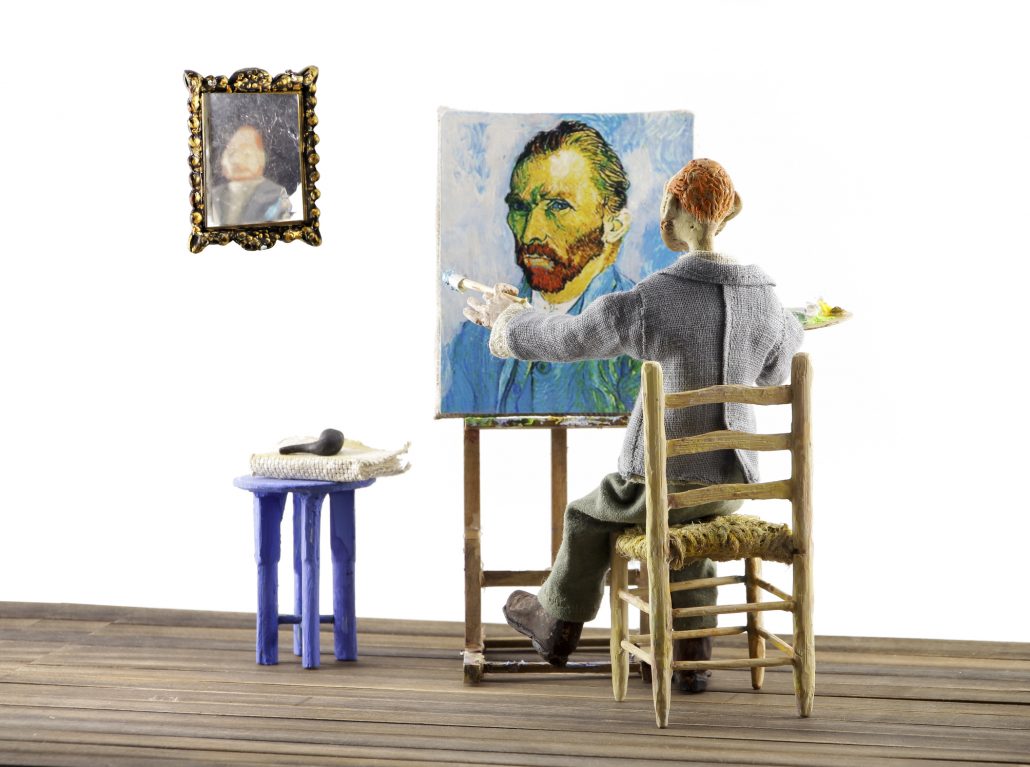
It is news to no one that connections are often made between many of the most famously creative figures in history and drug or alcohol abuse. Creative types have a reputation for being complex and conflicted individuals, and those characteristics also tend to be associated with alcohol and drug abuse. Not to say that creative types must be alcoholics or addicts, but to at least acknowledge how many addicts or alcoholics are incredibly talented people who still find ways of self-expression even through their struggles.
While we hear so many stories of modern celebrities who have either overcome their battles with substance use, or lost their lives to drugs and alcohol, some of the most influential artists in history also faced down similar issues. Whether it is music, art or literature, some of the most amazing works of cultural depth and significance came from people in the grips of addiction or alcoholism.
Here we take a look at 6 famous artists with addictions throughout history. NOTE: Not all the artists are of the visual variety.
-
Charles Dickens
Charles Dickens is probably most well-known for his part in changing the world of storytelling with the famous holiday fiction “A Christmas Carol” and the epic “A Tale of Two Cities”.
What is probably not nearly as well-know was the fact that Charles Dickens was also an opium user. After each day of writing it is said Dickens would settle down to smoke poppy latex from a hookah. He eventually died at the age of 58 from a stroke on June 9, 1870, which many have partially attributed to his opium use.
-
Jackson Pollock
The idea of Jackson Pollock having a little chaos in his life is probably not that strange to anyone who has seen his paintings. Pollock is revered for his messy “drip painting” technique, with the canvas of his work often splattered and streaked with a frenzy of color. In the 1940s Pollock gained instant fame. So when looking into the chaos of his life as an alcoholic, it is easy to see the metaphor.
Pollock’s alcoholism is said to have been exacerbated by the pressure of his success, and in 1956 he died in a drunk-driving accident that also killed one of his passengers.
-
Ernest Hemingway
Ernest Hemingway is probably one of the most notorious alcoholic artists in literature. As a Nobel Prize winner in 1954, Hemingway has been described as a “economical and understated” voice of that “changed the nature of American writing”; one of the greatest writers of the early to mid-twentieth century. He authored such historical works as:
- “A Farewell to Arms” (1929)
- “For Whom the Bell Tolls” (1940)
- “The Old Man and the Sea” (1852)
However, he is also well known for the intimate relationship he had with alcohol. In one tragic peek into how Hemingway reached to the bottle to cope with the world is a quote stating:
“Modern life, too, is often a mechanical oppression and liquor is the only mechanical relief.”
It is believed that his heavy drinking intensified a medical condition, which led to mental confusion and depression. Hemingway eventually took his life in 1961.
-
Philip K. Dick
You may have heard of the cult classic science fiction film Blade Runner, and if so you should get to know the source material, “Do Androids Dream of Electric Sheep?”
This deeply philosophical novel was written by American author Philip K. Dick. Other well-known sci-fi films were also inspired by his work, including:
- Total Recall
- Minority Report
This writer commonly utilized his art as a window into struggles with mental health or substance abuse. In fact, the author wrote dozens of novels about his own experiences of paranoia, schizophrenia, and drug abuse. He was known for taking drugs, particularly amphetamines. Eventually Philip K. Dick suffered a stroke at the age of 53, which cost him his life. Some have attributed this tragedy to the devastating impact of drugs on his body.
-
Jean-Michel Basquiat
Jean-Michel Basquiat is a famous street artist from Brooklyn who went from homeless and unemployed to selling paintings for 5 figures in just 2 years. Suddenly a single work of art by Basquiat was imposing a price-tage of $50,000. This was a height completely unheard of for any artist.
Needless to say, the sudden surge of fame was a shock to the young man’s system. Especially considering he was a self-admitted heroin addict. At one point the young man claimed he was using up to 100 bags of heroin a day.
Tragically, this astonishingly successful artist was found dead in his East Village apartment from a heroin overdose in 1988.
Basquiat was only 27 years old.
-
Vincent van Gogh
This may be the most ‘house-hold name’ on this list; Vincent van Gogh. Just the mention of his names stirs the feeling of fine art, while his impressionist style was a bold and dramatic footing from which the concept of modern art flourished.
In what can be seen as brilliant and breathtaking, his landscapes and soft self-portraits may not seem like the yearnings of a tortured soul. Staring into his most pivotal pieces, such as the instantly recognizable “The Starry Night” one may see bright optimism in the swirling clouds or burning stars. However, Van Gogh grappled with a deep depression and enervating alcoholism.
Van Gogh spoke of his drinking at one point stating alcohol had, “undoubtedly been one of the great causes of my madness.” His drinking grew worse as he indulged deeply in absinthe, and at the young age of 37 years old, Vincent van Gogh took his own life.
Whether you would say an artist is more likely to be an addict or alcoholic is debatable. However, even in the grips of a disease that diminishes the mind, body and spirit there have been those who have used their art to reach out and express their hopes, or their fears in a way that touches so many others. But some of the most talents and inspiring people have been taken from us far too soon by their addictions. If you or someone you love is struggling, please call toll-free now.
CALL NOW 1-888-922-5398
by Sher Delva | Jul 11, 2017 | Addiction, Addiction Stigma, Addiction Treatment, Mental Health, Withdrawal

Just over five years ago, Ralph Bailey was in his home about to attempt suicide. His addiction had spiraled out of control, and he did not believe he could ever live a day without drugs and alcohol. Then, in a moment Bailey describes as a“divine intervention,” his sister happened to come by the house and stopped him.
The next day, Bailey checked into Palm Partners Treatment Center, a Palm Healthcare facility. Now five years sober, Bailey is a valued employee at Palm Partners and speaks regularly to clients about his journey overcoming his addiction.
Recently Bailey was a guest on The Real Deal On… with Dug McGuirk. Surrounded by lights and cameras, Bailey describes the feeling of sharing his story as a “full circle” moment. He remembers a time when the cameras were on him for an entirely different reason. He was under investigation.
“I remember back in 2010 when I caught a case, and the FBI came in with pictures and audio of me, and it looks just like this.” He says looking around the room. “Now, when I say full circle, it means I went from being prosecuted with these cameras and microphones to actually sharing my experience, strength and hope with these same microphones and cameras.”
Reflecting Back on his “Death Date”
When Bailey first walked into Palm Partners on May 12, 2012, he was broken. In fact, Bailey says the most important day of his sobriety is not the day he entered treatment, but the day he attempted suicide. He refers to this day as his “death date.”
“I was broken to the point where my sobriety date is May 12, 2012, but I always tell my story with my death date which is May 11, 2012. What I mean by that is May 11 is the day I decided to commit suicide,” he says.
At this point, Bailey had struggled with addiction most of his life. He did not believe he could live without drugs and alcohol, but he did not want to continue living like he was. Therefore, suicide seemed like the only way out.
“I didn’t like where I was, and I didn’t want to go back to where I’ve been, and I was too scared to move forward because I could never picture living life without drugs and alcohol, so my plan was to end it all.”
In a moment that Bailey describes as a “divine intervention,” his sister happened to stop by the house and prevent the whole thing from happening.
“For me, it was totally divine intervention because I was successful at everything and it just so happens that for my suicide attempt, I got stopped. My sister came over to my house and stopped the whole thing. That’s when I broke down and told her I needed help.”
To his surprise, his sister told him the entire family knew about his addiction. Up until that point, he thought his addiction had been a secret for the past 20 years.
“She gave me the biggest hug and said ‘This is what the family’s been waiting to hear. You wasn’t fooling nobody,’ And the whole time, I’m thinking I had everybody fooled [and] nobody knew I was getting high.”
Learning to Cope Without Drugs
From an early age, Bailey struggled with abusing drugs and alcohol. He started around eighth grade and said he could not remember a time he did not use drugs and alcohol before his sobriety date.
“I can’t picture a time when I didn’t live without either one, and that’s what got me here.”
Still, like many, Bailey did attempt to get sober on his own.
“I did what everybody tries to do which is the detox on the couch.” He laughs.
Like most who attempt this method, he was unsuccessful. He did not know how to cope with the emotional and physical withdrawals of not using.
“It worked out good for a couple hours until boredom came in, until I didn’t know what else to do besides use drugs and alcohol, so I had nothing to fill the void when I tried to stop and that’s kinda related to my attempted suicide because I didn’t know what to do so that’s when I finally said enough is enough”
Bailey credits the staff, especially the therapists at Palm Partners for helping him learn how to fill the void.
“They’re the ones that made me realize I had more than just a drug and alcohol problem. I had anger issues. I had family issues.”
Bailey entered treatment in his 40s, a later stage of life compared to many in treatment, but he did not let the age of those around him affect his recovery process. Instead, Bailey says he wanted to make up for all the time he had wasted.
“I’ve wasted so much time in my life,” he says. “At that point, I didn’t care if I was getting clean with 18-year-olds, 20-year-olds; my main concern was the end result. As long as that was the same, it was all I cared about, but the main thing: I was tired. I had enough”
Starting Over On a Clean Slate
Furthermore, Bailey says he went to treatment as a “blank sheet of paper” and allowed the therapists and staff to provide him “new blocks to build on.”
“I took everything I knew and threw it out and started over,” he says.
The therapists at Palm Partners gave him the toolbox he needed and allowed him to realize he had the tools all along.
“That’s why I always say be honest with your therapists while you’re here because they can’t help you if you don’t tell them what’s wrong.”
At treatment, Bailey learned valuable lessons like how to deal with life when it does not go the way you want:
“Incidences like not getting your phone or incidences where you want to do something and you can’t should be a tool as ‘Alright, well how am I going to cope with wanting something that everybody has and I can’t have mine?’ That’s the same [lesson] that helps me stay clean. ”
Bailey says the times he could not access his phone taught him patience and helped him realize ineffective character defects addicts struggle with.
“Addicts, first we are manipulative, and then when manipulation doesn’t work, we’re crybabies,” he affirms. “We throw temper tantrums when we don’t get what we want, but we can’t do that in the real world.”
Navigating Grief: Learning to Change Your State:
One of the most powerful lessons Bailey shared in the interview was how he dealt with the death of his brother. After hearing his brother had passed away, he did what most would not think to do at that moment: jumping jacks.
“I had to do something to change my state,” he explains.
In that moment of despair, Bailey remembered something he learned from clinical director Dr. Beley about the way the addict’s mind works.
“Your brain automatically wants to take care of you. It doesn’t want you to feel any pain, but you have a five-second window to make a decision before you go back to what’s comfortable,” he says.
Bailey remembered the way the brain operates in regards to pain. He knew if he did not change his state immediately, his mind would retreat to what was most comfortable.
“If I didn’t start doing jumping jacks right away, my brain would automatically click to get high because that’s how I cope with things so, in order to stop that, I started doing jumping jacks and was able to change my state and then actually think and dissect everything that’s going on. Then start with a clear head and then move forward.”
“It is so huge to be able to change your state. You have to,” he says.
—
Ralph Bailey went from a hopeless drug addict to an inspiration of strength to those struggling in recovery. Throughout the interview, Ralph Bailey further elaborates on the importance of having a higher power, going to meetings and giving back. He talks about positive affirmations and further defines how to overcome negative situations through changing your state. We highly suggest you listen to the full interview for more on his journey.
“I never realized I was in a cocoon. I flourished, I came out of it, and it’s like wow, “he concludes.
If you are currently struggling in recovery, just remember that it is never too late to seek help. Even if you believe otherwise, recovery is possible. You do not have to live every day wondering where your next high will come from. Instead, you can regain control of your life like Ralph Bailey did. We want to help you. If you or someone you love is struggling, please call toll-free now.
CALL NOW 1-888-922-5398
by Sher Delva | Jul 5, 2017 | Addiction

Benzos are so overused that they top all prescriptions in psychiatric medicine and are among the most prescribed medication of any type in the United States. Nearly 50 million benzos prescriptions are written every year.
Prescriptions for benzos have skyrocketed over the past two decades. Between 1996 and 2013, the number of prescriptions for benzodiazepines more than tripled and fatal overdoses more than quadrupled.
What’s the Big Deal?
Benzos are known for helping with anxiety disorders and insomnia, so what’s the big deal if they are heavily prescribed?
Well, there are a couple of reasons why this is a major problem.
First, there is evidence indicating these drugs do not work well over the long-term. Studies reveal that long-term use of benzos can increase anxiety symptoms. Furthermore, it is possible to treat anxiety and sleep disorders without medication, or at least with other medications besides benzos.
The second problem is the addiction and dependence risk. People who receive high doses of benzos can become physically dependent fairly quickly. Without medical supervision, the withdrawals from benzos are severe, ranging from intensified anxiety to high blood pressure, seizures, and convulsions.
The longer someone uses benzos, the greater the likelihood of addiction. People who misuse benzos tend to take higher-than-prescribed doses or mix the pills with alcohol or other drugs. Benzos are often chewed or crushed which interferes with the timed-release formula and speeds up the effects. This way of using benzos is extremely dangerous.
A Deadly Combination?
The true dangers of benzos really amplify when they are taken with other substances like opioids and alcohol. The risk of combining benzos and opioids is well-known, yet many doctors prescribe benzos and opioids together to patients.
From 2001 to 2013, benzos and opioid prescriptions increased by 80%, according to an analysis by researchers at the Stanford University School of Medicine. It is not considered safe to use both together yet this is fairly standard practice.
Opioids vs. Benzos?
Highlighting the dangers of benzos is not intended to diminish the significant dangers of prescription painkillers. Make no mistake, we are in the midst of an opioid epidemic, and opioid addiction has become a national crisis. However, in 30 percent of opioid-related deaths, a combination of benzos and opioids caused the overdose. That’s why it is so important to talk about benzos when we are discussing the opioid epidemic.
Why is this combination so deadly?
Opioids and benzos both slow down the body systems, particularly the respiratory and cardiovascular systems. Therefore, it is not difficult to understand why this combination is so risky. You are essentially combining two substances that slow down the functioning of your body. If you add a cocktail on top of that, it only compounds the problem. In worse case scenarios, this combination of substances causes breathing to stop.
In addition, alcoholics regularly abuse the benzo alprazolam, known by its brand name Xanax. Alcohol is a depressant so combining alcohol with the sedative effects of benzos increases the likelihood of overdose and respiratory failure.
Should Doctors Take the Blame?
The use of benzos often begins in the form of a prescription. Dual prescriptions of benzos and opioids are far from uncommon. Doctors are more likely to prescribe to patients who complain of pain, anxiety, and insomnia during a limited 15-minute consultation time.
In this rushed state, a physician may desire to help a patient but not have the time to explore the underlying causes. Therefore, medication becomes the easiest treatment. It unclear whether doctors are adequately warning their patients of the potential dangers of combining these drugs to help prevent addiction. As for now, it is difficult to place the blame on one person or thing, but one thing is for certain: people need to know the risks.
—
Overall, more and more people are struggling with addiction, and overdose death numbers have reached epidemic levels. If you are currently struggling with addiction, please do not wait. Recovery is possible. Call toll-free today.
CALL NOW 1-888-922-5398
by Sher Delva | Jun 22, 2017 | Addiction, Addiction Medicine, Addiction Stigma, Addiction Treatment, Stigma, Therapy, Withdrawal
 The opioid epidemic continues to reach epidemic numbers, and with the increasing overdoses comes increasing cases of hepatitis C. New cases of hepatitis C have nearly doubled over the past few years. Furthermore, those with opioid addiction are more likely to suffer from a variety of health disorders, complicating treatment for substance use disorder.
Hepatitis C is among the most concerning disorder to affect people with opioid addiction. People who abuse opioids are 9.1 times more likely to have hepatitis-C (HCV), in comparison to those who did not abuse opioids, according to an analysis by the health care company Amino. Amino drew data from the claims of 3.1 million privately insured patients between 2014 and 2016.
As the opioid epidemic spreads throughout the country, new cases of HCV have skyrocketed. In 2014, there were an estimated 30,500 new cases in the United States. This is nearly double the number of new cases in 2011, according to STAT News.
The CDC reports that new HCV infection is rising specifically among intravenous drug users under 40 years old, particularly in more rural areas. People with opioid use disorder are more likely to drink to excess, and more likely to have suicidal ideation.
While these numbers are shocking, many are not surprised:
“It’s known that people with co-occurring behavioral and mental health issues are at high risk for addiction even when prescribed opioids for a bonafide prescription medical use,” Dr. Anna Lembke, a Stanford University psychiatrist, and opioid addiction expert, told Amino.
However, Lembke was particularly moved by the fact that people with opioid addiction are seven times more likely to suffer from “failed back syndrome,” a chronic condition that is diagnosed following back surgeries.
“What I thought was really interesting was the correlation with failed back syndrome,” she said. “Perhaps failed back syndrome is a risk factor for developing an opioid use disorder—and that could be part of the reason why this community experiences such chronicity and lack of improvement. This is a subgroup that’s especially vulnerable to opioid misuse.”
The data collected by Amino looked at health claims among people with a variety of insurance codes, representing conditions from opioid dependence to opioid abuse in remission. Amino is a private insurer, and the data revealed a sharp increase in opioid abuse specifically among those with private insurance. According to the data, there was a six-fold increase in opioid-related insurance claimed between 2012 and 2016 among private insurers.
However, Lembke notes that this sharp increase may be underrepresented:
“Patients don’t want to carry them on their charts, and doctors don’t want to stigmatize their patients,” said Lembke. “But they will go ahead and chart it if there’s utility in it. And the utility is you can’t get buprenorphine, methadone maintenance, or naltrexone paid for by a third-party payer unless it’s diagnosed.”
Last month was Hepatitis Awareness Month. The treatments for hepatitis C have really come a long way, and it no longer as life endangering as It once was. The key is to seek treatment early. Unfortunately, due to the stigma of addiction, many are afraid to get tested.
Studies like these show that the numbers are not improving. Those with opioid addiction seriously need testing to prevent the disease from progressing any further. Please do not feel shame about testing for this disorder. Furthermore, if you are struggling with substance use disorder, please reach out to us. We have the tools to guide you to a sober life. Do not wait. Call today.
CALL NOW 1-888-922-5398


