by Justin Mckibben | Jul 21, 2017 | Addiction, Addiction Stigma, Celebrity, Chester Bennington, Death, Drug Abuse, Mental Health, Mental Health Stigma, Suicide

(This content is being used for illustrative purposes only; any person depicted in the content is a model)
I remember in junior high school when the guys and I pressured my friends mom to drive through a snow storm to the concert. After bugging a couple buddies to pitch in and buy me and my friend Chris tickets to see Linkin Park live in Columbus, Ohio for their 2003 tour with Hoobastank, Story of the Year and POD. While some of my crew preferred these bands I had history with Linkin Park albums:
- Hybrid Theory
- Reanimation
- Meteora
I mean come on; Meteora was one of the highest selling alternative music albums of all time! Hybrid Theory went multi-Platinum in several countries! You don’t have to love Linkin Park to acknowledge the impact this band had on music.
We were only 13 or 14 years old, and it was a massive crowd, probably full of lost kids just like us. Linkin Park is that sometimes melodic, sometimes growling scream that spoke to something in so many people. At 11 and 12 years old, when their fame was just beginning, their songs put words to things I didn’t know how to say. It was gloom and rage that inspired millions of people.
Granted in years since, I have grown away from their changes in sound and style. But I remember having the LP patches and stickers all over my stuff, next to my Tupac and Lynyrd Skynyrd.
I remember wanting to dye my hair and spike it out… because punk rock! And to freak out my mom.
And I remember listening to Reanimation on repeat trying to learn all the new words to remixes of my old favorites.
I remember when they did a remix album Collison Course with Jay Z.
And I remember stomping around the street in my small Midwestern neighborhood, late night in the pouring rain, banging my head to “One Step Closer” feeling like the most misunderstood kid ever.
So when the news broke today that the lead singer of Linkin Park, Chester Bennington had died it was so surreal. But when you look back at the artists music and his life, we have always been given a window into his pain, through a fierce puncturing scream and emotional lyrics.
Early Reports
Initial reports from TMZ were later reiterated by various sources of Bennington’s passing. Brian Elias, the chief of operations for the Los Angeles County coroner’s office, confirmed the death reports. At the tragically young age of 41, Chester Bennington leaves behind 6 children from two relationships. Not to mention a loyal family of musicians and millions of fans all over the world.
According to Elias the singer’s death is currently being investigated as a possible suicide. Chester Bennington was close friends with the other legendary rock vocalist Chris Cornell, who recently committed suicide in May. On what would have been Cornell’s 53rd birthday, Bennington appears to have taken his own life.
Social media sites like Facebook and Twitter were lit up in a matter of hours with thousands and thousands of fans sending their love and support to Bennington’s family and the band. Celebrities from Dwayne ‘The Rock’ Johnson to director Joss Whedon, rockers like Corey Taylor of Slipknot and graphic artists like BossLogic, to Chance the Rapper, Killer Mike and Cypress Hill took to the internet to pay homage and talk about how Linkin Park’s music helped them through tough times.
Chester Bennington: Pain and Addiction
With songs that were full of dark and deeply personal themes and words, it is not hard to imagine that Chester Bennington faced his demons. But Bennington himself has been open about his fight with drug and alcohol addiction throughout his life, and his battles with the abuse he faced in his childhood.
Skimming through multiple sites and past interviews, you find that in life Chester Bennington had seen his fair share of darkness. In an interview years back he opened up about being molested and beaten by an older male friend beginning at age seven. At 11 years old, his parents divorced and he was forced to live with his father. After discovering drugs, he used:
At one point saying in an interview in 2016 he was taking 11 hits of acid a day:
“I dropped so much acid I’m surprised I can still speak. I’d smoke a bunch of crack, do a bit of meth and just sit there and freak out. Then I’d smoke opium to come down. I weighed 110 pounds.”
Benning was able to avoid heavy drug use for a while, but after becoming hugely successful, drugs found their way back into his life. For a few years after getting clean in 2006, Bennington went on to openly discussed how his fight with addiction and his recovery fed into the roaring rage and agony in his music. In an interview in 2009 with Noisecreep, Bennington stated:
“I have been able to tap into all the negative things that can happen to me throughout my life by numbing myself to the pain so to speak and kind of being able to vent it through my music,”
“I don’t have a problem with people knowing that I had a drinking problem. That’s who I am and I’m kind of lucky in a lot of ways cause I get to do something about it.”
One of the most well-known songs Linkin Park ever released was the haunting and heartbroken song “Crawling” from their debut album Hybrid Theory. The video was pretty cool visually for its time, and the song itself is pretty much the pinnacle of emotional screaming “nu rock” of the early 2000s. Linkin Park later won the Grammy for best hard rock performance in 2001 for “Crawling”.
You want to see something intense, watch the clips of Chris Cornell and Chester Bennington sing “Crawling” live on stage in 2008.
Later on Bennington was quoted as saying this song particularly was,
“- about feeling like I had no control over myself in terms of drugs and alcohol.”
He went on to explain the feeling of being able to write the words, sing that feeling into his music and win a Grammy after selling millions of records. In another interview, when discussing his back and forth battle with addiction and relapse Chester Bennington talked about the song “Breaking the Habbit” and how upon reading the lyrics, he broke into tears because he felt that at the time his band mate and fellow vocalist Mike Shinoda was writing about his life.
In His Own Words
In an interview that recently became on viral video in light of the tragic death of Chester Bennington, the singer himself made a profound statement about struggling with life on life’s terms, depression and the desire to give up, saying:
“None of us are immune from just shit happening to you, and not to you but just making poor choices or being human. There’s always that element and for me life got really weird and really hard all at one time.
There was a few times over the last couple years where I was just ready to throw in the towel and just give up on everything, but I found that, for me most of my suffering is self-inflicted.”
He later continues stating:
“I’ve always had this depressive side, and I think that’s something some people may not have gone down the road of injecting and living on the streets and that kind of stuff, so they think ‘Oh my story’s not that bad’. Dude, no man, if you’re here, if you’re here, it’s that bad.”
His words have always been good for striking a nerve. Now especially these words are easy to relate to, and easy to see how Bennington was desperate for something… what, we may never really know.
In death, Bennington has shown us that we don’t always know what people are going through. Back in 2016 he had told an interviewer from Metal Hammer,
“The idea that success equals happiness pisses me off. It’s funny to think that just because you’re successful you’re now immune to the full range of the human experience.”
It has become another tragic and heartbreaking example of how success in the professional or monetary sense does not make someone happy. That recovery and sobriety can be a battle, and no amount of money or prestige can make someone content with their own mind.
In life, Chester Bennington used his music to teach us about experiencing our pain as a beautiful thing, and to find ways to express it. His music showed a lot of young people they were not alone, and that being hurt did not mean they had to be afraid. And even if you were afraid, he admitted that fear is how we fall. He spoke openly in interviews countless times over the years about the traumas he personally had to face, and about the devastation he had put himself through in that process. Chester Bennington taught us we didn’t have to be perfect to be transparent, and for some of us gave us a reason to relish in the fury of youth.
Bennington talked about finding something worth fighting for, whether it was freedom and human rights, or identity and creativity. By uniting so many people from all over the globe in common emotional intensity, it is music like that of Linkin Park that also removes some of the stigma surrounding depression, addiction and trauma. And this news has inspired a greater call to action for anyone struggling with substance use disorder, depression or abuse to reach out and find help any way they can.
From one kid who knows depression, anxiety and alcoholism… and who discovered unique forms of self-expression through your music and the various projects you were involved with visually and otherwise, thank you for all you gave us.
“In the memory you’ll find me
Eyes burning up
The darkness holding me tightly
Until the sun rises up”
In memory of
Chester Bennington
March 20, 1976 – July 20, 2017
If you or someone you love is struggling, please do not wait. Please call toll-free now. We want to help. You are not alone.
CALL NOW 1-888-922-5398
by Sher Delva | Jul 18, 2017 | Addiction, Addiction Stigma, Addiction Treatment, Drug Abuse, Mental Health, Stigma, Therapy, Uncategorized

(This content is being used for illustrative purposes only; any person depicted in the content is a model)
A new Oregon bill is headed straight to the governor’s desk.
If passed, the bill would reclassify certain illicit drugs from a felony to a misdemeanor. The goal is to reduce the state’s prison population.The bill would also increase access to treatment for those without prior felonies or convictions for drug possessions, the Washington Post reports.
The bill would reduce penalties for possession of heroin, cocaine, meth and other illicit substances. The bill was already approved by the state legislature and now awaits the signature of the governor.
“We are trying to move policy towards treatment rather than prison beds,” said state Senator Jackie Winters, co-chair of the Public Safety Committee. “We can’t continue on the path of building more prisons when often the underlying root cause of the crime is substance use.”
Also included in the bill is a new initiative that will track the effects of law enforcement policies and procedures by collecting data on the demographic of Oregonians stopped by police. This initiative aims to identify any potential racist practices and address the disproportionate number of black Oregonians behind bars.
According to a 2016 report, by the Sentencing Project, blacks make up less than 2% of the state’s population; yet represent more than 9% of the state prison population as of 2014. Furthermore, the report found that the incarceration rates for black individuals are 5.6 times that of whites.
“Too often, individuals with addiction issues find their way to the doorstep of the criminal justice system when they are arrested for possession of a controlled substance,” says Kevin Campbell, executive director of the Oregon Association Chiefs of Police. “Unfortunately, felony convictions in these cases also include unintended and collateral consequences including barriers to housing and employment and a disparate impact on minority communities.”
Still, some lawmakers are wary of the bill and disagree with its “soft on crime” approach. State Senator Betsy Johnson, a Democrat who voted against the bill, said the shift toward decriminalization promotes a “hug-a-thug policy.”
The bill is headed towards the desk of Governor Kate Brown who will ultimately have the final say. In the past, Governor Brown has expressed support for the bill.
“While we still have much work ahead, HB 2355 represents an important step towards creating a more equitable justice system to better serve all Oregonians,” said Brown. “Addressing disparities that too often fall along racial and socioeconomic lines should not be political issues.”
While states like Oregon are attempting to address these disparities, on the federal level, things are headed in a different direction. Recently, Attorney General Jeff Sessions attended a D.A.R.E. training conference in Texas. While at the conference, Jeff Sessions praised the D.A.R.E. program of the 80s and 90s and hinted at bringing back that initiative today.
D.A.R.E is famously known as the “Just Say No” anti-drug initiative led by Nancy Reagan that took over school campuses in the 80s and 90s. The problem with the campaign is that there were never any proven results stating the program was effective in lowering drug use.
According to the U.S. Bureau of Justice Assistance:
“To date, there have been more than 30 evaluations of the program that have documented the negligible long-term impacts on teen drug use.”
Although the program has undergone some changes, the effectiveness of the initiative remains uncertain. Overall, it is interesting the different strategies certain parts of the country are taking in regards to addressing addiction. While some are focused on decriminalization, other areas have a tougher approach.
What are your thoughts on these new policies? Getting help can save a life, and treatment can offer a far better future than prison. If you or someone you love is struggling, please call toll-free now.
CALL NOW 1-888-922-5398
by Sher Delva | Jul 11, 2017 | Addiction, Addiction Stigma, Addiction Treatment, Mental Health, Withdrawal
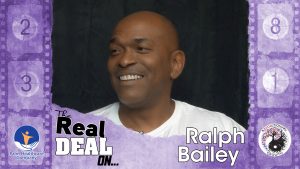
Just over five years ago, Ralph Bailey was in his home about to attempt suicide. His addiction had spiraled out of control, and he did not believe he could ever live a day without drugs and alcohol. Then, in a moment Bailey describes as a“divine intervention,” his sister happened to come by the house and stopped him.
The next day, Bailey checked into Palm Partners Treatment Center, a Palm Healthcare facility. Now five years sober, Bailey is a valued employee at Palm Partners and speaks regularly to clients about his journey overcoming his addiction.
Recently Bailey was a guest on The Real Deal On… with Dug McGuirk. Surrounded by lights and cameras, Bailey describes the feeling of sharing his story as a “full circle” moment. He remembers a time when the cameras were on him for an entirely different reason. He was under investigation.
“I remember back in 2010 when I caught a case, and the FBI came in with pictures and audio of me, and it looks just like this.” He says looking around the room. “Now, when I say full circle, it means I went from being prosecuted with these cameras and microphones to actually sharing my experience, strength and hope with these same microphones and cameras.”
Reflecting Back on his “Death Date”
When Bailey first walked into Palm Partners on May 12, 2012, he was broken. In fact, Bailey says the most important day of his sobriety is not the day he entered treatment, but the day he attempted suicide. He refers to this day as his “death date.”
“I was broken to the point where my sobriety date is May 12, 2012, but I always tell my story with my death date which is May 11, 2012. What I mean by that is May 11 is the day I decided to commit suicide,” he says.
At this point, Bailey had struggled with addiction most of his life. He did not believe he could live without drugs and alcohol, but he did not want to continue living like he was. Therefore, suicide seemed like the only way out.
“I didn’t like where I was, and I didn’t want to go back to where I’ve been, and I was too scared to move forward because I could never picture living life without drugs and alcohol, so my plan was to end it all.”
In a moment that Bailey describes as a “divine intervention,” his sister happened to stop by the house and prevent the whole thing from happening.
“For me, it was totally divine intervention because I was successful at everything and it just so happens that for my suicide attempt, I got stopped. My sister came over to my house and stopped the whole thing. That’s when I broke down and told her I needed help.”
To his surprise, his sister told him the entire family knew about his addiction. Up until that point, he thought his addiction had been a secret for the past 20 years.
“She gave me the biggest hug and said ‘This is what the family’s been waiting to hear. You wasn’t fooling nobody,’ And the whole time, I’m thinking I had everybody fooled [and] nobody knew I was getting high.”
Learning to Cope Without Drugs
From an early age, Bailey struggled with abusing drugs and alcohol. He started around eighth grade and said he could not remember a time he did not use drugs and alcohol before his sobriety date.
“I can’t picture a time when I didn’t live without either one, and that’s what got me here.”
Still, like many, Bailey did attempt to get sober on his own.
“I did what everybody tries to do which is the detox on the couch.” He laughs.
Like most who attempt this method, he was unsuccessful. He did not know how to cope with the emotional and physical withdrawals of not using.
“It worked out good for a couple hours until boredom came in, until I didn’t know what else to do besides use drugs and alcohol, so I had nothing to fill the void when I tried to stop and that’s kinda related to my attempted suicide because I didn’t know what to do so that’s when I finally said enough is enough”
Bailey credits the staff, especially the therapists at Palm Partners for helping him learn how to fill the void.
“They’re the ones that made me realize I had more than just a drug and alcohol problem. I had anger issues. I had family issues.”
Bailey entered treatment in his 40s, a later stage of life compared to many in treatment, but he did not let the age of those around him affect his recovery process. Instead, Bailey says he wanted to make up for all the time he had wasted.
“I’ve wasted so much time in my life,” he says. “At that point, I didn’t care if I was getting clean with 18-year-olds, 20-year-olds; my main concern was the end result. As long as that was the same, it was all I cared about, but the main thing: I was tired. I had enough”
Starting Over On a Clean Slate
Furthermore, Bailey says he went to treatment as a “blank sheet of paper” and allowed the therapists and staff to provide him “new blocks to build on.”
“I took everything I knew and threw it out and started over,” he says.
The therapists at Palm Partners gave him the toolbox he needed and allowed him to realize he had the tools all along.
“That’s why I always say be honest with your therapists while you’re here because they can’t help you if you don’t tell them what’s wrong.”
At treatment, Bailey learned valuable lessons like how to deal with life when it does not go the way you want:
“Incidences like not getting your phone or incidences where you want to do something and you can’t should be a tool as ‘Alright, well how am I going to cope with wanting something that everybody has and I can’t have mine?’ That’s the same [lesson] that helps me stay clean. ”
Bailey says the times he could not access his phone taught him patience and helped him realize ineffective character defects addicts struggle with.
“Addicts, first we are manipulative, and then when manipulation doesn’t work, we’re crybabies,” he affirms. “We throw temper tantrums when we don’t get what we want, but we can’t do that in the real world.”
Navigating Grief: Learning to Change Your State:
One of the most powerful lessons Bailey shared in the interview was how he dealt with the death of his brother. After hearing his brother had passed away, he did what most would not think to do at that moment: jumping jacks.
“I had to do something to change my state,” he explains.
In that moment of despair, Bailey remembered something he learned from clinical director Dr. Beley about the way the addict’s mind works.
“Your brain automatically wants to take care of you. It doesn’t want you to feel any pain, but you have a five-second window to make a decision before you go back to what’s comfortable,” he says.
Bailey remembered the way the brain operates in regards to pain. He knew if he did not change his state immediately, his mind would retreat to what was most comfortable.
“If I didn’t start doing jumping jacks right away, my brain would automatically click to get high because that’s how I cope with things so, in order to stop that, I started doing jumping jacks and was able to change my state and then actually think and dissect everything that’s going on. Then start with a clear head and then move forward.”
“It is so huge to be able to change your state. You have to,” he says.
—
Ralph Bailey went from a hopeless drug addict to an inspiration of strength to those struggling in recovery. Throughout the interview, Ralph Bailey further elaborates on the importance of having a higher power, going to meetings and giving back. He talks about positive affirmations and further defines how to overcome negative situations through changing your state. We highly suggest you listen to the full interview for more on his journey.
“I never realized I was in a cocoon. I flourished, I came out of it, and it’s like wow, “he concludes.
If you are currently struggling in recovery, just remember that it is never too late to seek help. Even if you believe otherwise, recovery is possible. You do not have to live every day wondering where your next high will come from. Instead, you can regain control of your life like Ralph Bailey did. We want to help you. If you or someone you love is struggling, please call toll-free now.
CALL NOW 1-888-922-5398
by Sher Delva | Jul 5, 2017 | Addiction

Benzos are so overused that they top all prescriptions in psychiatric medicine and are among the most prescribed medication of any type in the United States. Nearly 50 million benzos prescriptions are written every year.
Prescriptions for benzos have skyrocketed over the past two decades. Between 1996 and 2013, the number of prescriptions for benzodiazepines more than tripled and fatal overdoses more than quadrupled.
What’s the Big Deal?
Benzos are known for helping with anxiety disorders and insomnia, so what’s the big deal if they are heavily prescribed?
Well, there are a couple of reasons why this is a major problem.
First, there is evidence indicating these drugs do not work well over the long-term. Studies reveal that long-term use of benzos can increase anxiety symptoms. Furthermore, it is possible to treat anxiety and sleep disorders without medication, or at least with other medications besides benzos.
The second problem is the addiction and dependence risk. People who receive high doses of benzos can become physically dependent fairly quickly. Without medical supervision, the withdrawals from benzos are severe, ranging from intensified anxiety to high blood pressure, seizures, and convulsions.
The longer someone uses benzos, the greater the likelihood of addiction. People who misuse benzos tend to take higher-than-prescribed doses or mix the pills with alcohol or other drugs. Benzos are often chewed or crushed which interferes with the timed-release formula and speeds up the effects. This way of using benzos is extremely dangerous.
A Deadly Combination?
The true dangers of benzos really amplify when they are taken with other substances like opioids and alcohol. The risk of combining benzos and opioids is well-known, yet many doctors prescribe benzos and opioids together to patients.
From 2001 to 2013, benzos and opioid prescriptions increased by 80%, according to an analysis by researchers at the Stanford University School of Medicine. It is not considered safe to use both together yet this is fairly standard practice.
Opioids vs. Benzos?
Highlighting the dangers of benzos is not intended to diminish the significant dangers of prescription painkillers. Make no mistake, we are in the midst of an opioid epidemic, and opioid addiction has become a national crisis. However, in 30 percent of opioid-related deaths, a combination of benzos and opioids caused the overdose. That’s why it is so important to talk about benzos when we are discussing the opioid epidemic.
Why is this combination so deadly?
Opioids and benzos both slow down the body systems, particularly the respiratory and cardiovascular systems. Therefore, it is not difficult to understand why this combination is so risky. You are essentially combining two substances that slow down the functioning of your body. If you add a cocktail on top of that, it only compounds the problem. In worse case scenarios, this combination of substances causes breathing to stop.
In addition, alcoholics regularly abuse the benzo alprazolam, known by its brand name Xanax. Alcohol is a depressant so combining alcohol with the sedative effects of benzos increases the likelihood of overdose and respiratory failure.
Should Doctors Take the Blame?
The use of benzos often begins in the form of a prescription. Dual prescriptions of benzos and opioids are far from uncommon. Doctors are more likely to prescribe to patients who complain of pain, anxiety, and insomnia during a limited 15-minute consultation time.
In this rushed state, a physician may desire to help a patient but not have the time to explore the underlying causes. Therefore, medication becomes the easiest treatment. It unclear whether doctors are adequately warning their patients of the potential dangers of combining these drugs to help prevent addiction. As for now, it is difficult to place the blame on one person or thing, but one thing is for certain: people need to know the risks.
—
Overall, more and more people are struggling with addiction, and overdose death numbers have reached epidemic levels. If you are currently struggling with addiction, please do not wait. Recovery is possible. Call toll-free today.
CALL NOW 1-888-922-5398
by Sher Delva | Jun 28, 2017 | Addiction, Addiction Stigma, Addiction Treatment, Drug Abuse, Mental Health, Prescription Drugs, Stigma, Therapy, Uncategorized

One Ohio City is fed up with dealing with drug addicts who overdose over and over again.
Their solution? Simple: Three strikes and you’re out.
But is this really the right way to go about this?
Recently, Dan Picard, a councilman from Middletown, Ohio proposed a new strategy to handle the influx of overdose calls in his city. He claims the city had spent $100,000 on the lifesaving drug. His solution is to limit the number of times an addict can be revived with Narcan.
“It’s not a proposal to solve the drug problem,” Picard said this week. “My proposal is in regard to the financial survivability of our city. If we’re spending $2 million this year and $4 million next year and $6 million after that, we’re in trouble. We’re going to have to start laying off. We’re going to have to raise taxes.”
While it may seem extreme, Picard believes something must be done to reduce the hundreds of thousands of dollars spent administering the overdose antidote Naloxone.
According to the National Institute of Health, Naloxone, also known by the brand name Narcan, is a “medication designed to rapidly reverse opioid overdose.”
How the Proposed Plan Works
The plan proposed states that anyone who overdoses twice must complete community service equivalent to the cost of administering the Narcan. If the person has been provided Narcan two overdoses before and has not completed the required community service requirement, dispatchers will not send help their way.
“If the dispatcher determines that the person whose overdosed is somebody’s that’s been part of this program for two previous overdoses and has not completed community service and has not cooperated in the program, then we wouldn’t dispatch,” Picard explains.
Middletown has seen a significant spike in overdoses. Just last year alone, there were 532 overdoses reported. It may sound extreme, but Picard insists the city cannot afford to continue responding to overdoses at the same rate.
“We’ve got to do what we’ve got to do to maintain our financial security, and this is just costing us too much money,” he told NBC affiliate WLWT.
This city of Middletown, Ohio spent three times as much on Narcan this year as they did all of 2016. The numbers in 2017 already surpass that of the previous year at 577 overdoses so far.
Numbers Soar Throughout Ohio
All across Ohio, communities like Cleveland, Elyria, Parma, Chardon, and others have seen people need Narcan again and again after overdosing on opioids.
As of right now, the fire department is required by law to provide Narcan in response to an overdose. The legal department is reviewing this plan proposed by Picard. In the meantime, the fire department is applying for grants and donation to increase funds for Narcan.
Sal Valdez, the Clinical Coordinator for American Medical Response in Rochester, stated to a local news station, that he responds to at least four drug overdoses every day and about 80 every month. Each time, paramedics administer Narcan, they could need multiple doses. He also notices overdoses occurring in similar areas to repeat offenders.
“Sometimes we do know these patients by name,” Valdez said. “In my experience, we do see the same patients over and over again, and we respond to the same locations.”
Way Too Extreme?
One study estimates the cost of the prescription drug opioid epidemic costs American society $78.5 billion. Regardless, many find this proposed strategy way too extreme. This could mean the difference between life and death for some, preventing them the opportunity to recover.
Daniel Raymond, the deputy director of the Harm Reduction Coalition, told the Washington Post, that he’s “disappointed” by Picard’s plan of action. He noted that the proposal was an insult to families of loved ones struggling with addiction.
“Ohio is an epicenter of the heroin epidemic … and you can empathize with the frustration, but not with this type of solution,” Raymond told The Post.
What are your thoughts on this plan? Personally, it feels like this proposal only further stigmatizes the perception of addiction. Would we treat any other illness in this manner?
We believe recovery is a better option. Addiction should receive treatment just like any disease. Please seek help if you are struggling with substance abuse. Please call toll-free today to speak to an addiction specialist. We want to help.
CALL NOW 1-888-922-5398


